The Urban Imperative is an independent editorial publication. We write about urban nature, public space, trail networks, green infrastructure, and the systems that shape whether communities are livable over the long term.
We are not an NGO. We are not a government body. We are not a consultancy selling services or a nonprofit looking for donations. This is an editorial project, produced independently, with no institutional affiliations and no sponsors.
Why This Exists
There is no shortage of writing about cities. But much of it falls into familiar grooves: advocacy organizations pushing specific campaigns, consultancies producing reports for clients, government agencies publishing in bureaucratic language that nobody reads voluntarily, or academic journals locked behind paywalls and written for other academics.
What tends to be missing is writing for the people who actually live in towns and cities and want to understand how the systems around them work. People who sit on planning commissions, attend public meetings, serve on trail committees, vote on bond measures, or simply want to know why their neighborhood is ten degrees hotter than the one across the river.
The Urban Imperative exists to fill that space. We write clearly, use real examples, and aim to be genuinely useful rather than impressive.
What We Cover
Our focus sits at the intersection of ecology and the built environment. In practice, that means topics like:
- Urban tree canopy, habitat corridors, and biodiversity in places where people live
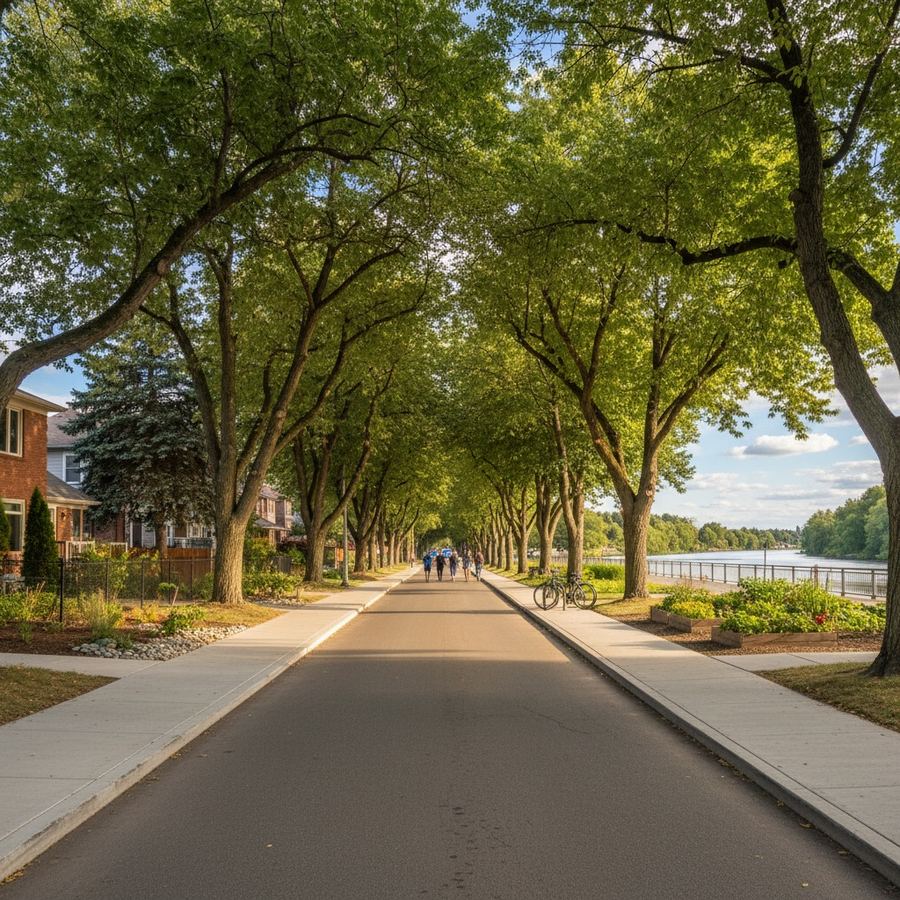
- Trail networks and greenways as both recreational and ecological infrastructure
- Waterfront access, park connectivity, and the civic value of public space
- Climate resilience at the neighborhood level: heat, flooding, stormwater, shade
- Green infrastructure and what it actually does when implemented well
- How small and mid-sized cities face these issues differently than large metros
We draw on frameworks like SITES, LEED for Neighborhood Development, and the Trust for Public Land's 10-minute walk standard, but we try to explain them rather than assume familiarity.
Our Standards
Every article on this site is written with attention to accuracy, specificity, and clarity. We cite real examples: Portland's tree canopy program, Chicago's 606 trail, Singapore's park connector network, the 30x30 conservation initiative. When we reference research or policy, we aim to point readers to the original source.
We do not accept sponsored content. We do not publish press releases. We do not take money from organizations we write about. Our editorial approach page explains how we think about sourcing, tone, and independence in more detail.
Scope and Scale
We do not focus exclusively on large cities. Much of what we write applies to towns and small metros, places with populations of 10,000 or 50,000 or 150,000 that face the same fundamental questions about green space, trail access, and environmental resilience but with fewer resources and less attention from national media. The principles are the same. The constraints are different. We try to be useful across that range.
Get Involved
If you have a correction, a story suggestion, or expertise you would like to share, see our submission guidelines or use the contact form. We read everything that comes in. We are especially interested in hearing from people with firsthand experience in the communities we write about, whether that means managing a trail system, serving on a tree board, or simply paying close attention to what works and what does not in the places where they live.