Trail systems are easy to celebrate and difficult to evaluate honestly. Every ribbon-cutting announcement makes a new trail sound transformative, but the question that matters is simpler: does the trail network actually work for the people who live here? Is it connected? Is it maintained? Can a parent with a stroller or a person using a wheelchair get from one end to the other without encountering a dead end, an unmarked intersection, or a stretch of gravel that turns to mud after every rainfall?
This checklist is designed for residents, local advocates, and community leaders who want to assess a trail system on practical terms. It is not a professional audit tool. It is a set of questions that any observant person can answer by walking or riding the trails in their community and paying attention.
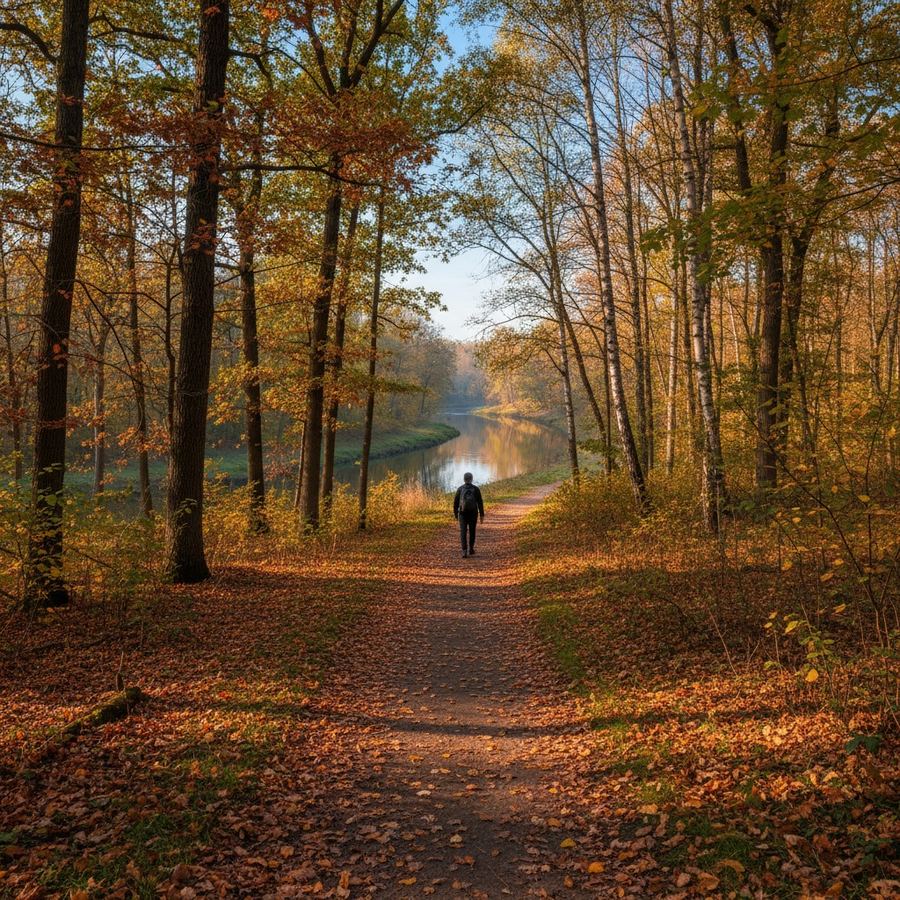
Connectivity and Network Design
1. Does the trail connect to places people actually go? A trail that links neighborhoods to schools, grocery stores, parks, or downtown is far more useful than one that loops through a subdivision and stops. The best trail networks function as transportation, not just recreation. Look at whether the trail touches real destinations or whether it dead-ends in a cul-de-sac.
2. Are there logical connections between trail segments? Fragmented trails, where one section ends and the next begins a half-kilometer away along a busy road, are a sign that the system was built project by project rather than planned as a network. Check whether a person can travel a meaningful distance without being forced onto a road shoulder.
3. Is the trail system connected to regional routes? Many towns exist within broader trail networks, county greenways, or rail-trail corridors. A strong local system ties into these larger routes. For Ontario communities, resources like those at ontariobikepaths.com can help identify how local trails relate to regional cycling and walking networks.
4. Does the network serve multiple neighborhoods, or just one part of town? Trail access should not be limited to the newest subdivision or the wealthiest area. Look at a map of the system and ask whether every part of town has reasonable access within a short walk or ride.
Surface Quality and Conditions
5. Are the trail surfaces appropriate for the stated use? A trail marketed for cycling and walking should have a hard, smooth surface. A nature trail through a ravine can reasonably be packed earth or crushed stone. Problems arise when municipalities advertise a trail as multi-use but build it with a surface that becomes unusable in wet weather.
6. Is the surface maintained consistently? Cracks, root heave, standing water, and eroded shoulders are signs of deferred maintenance. Walk the full length of a trail section, not just the trailhead.
7. Is there adequate drainage? Trails that flood regularly or develop puddles across their full width after moderate rain were either poorly designed or poorly sited. Drainage determines whether a trail is usable twelve months a year or only eight.
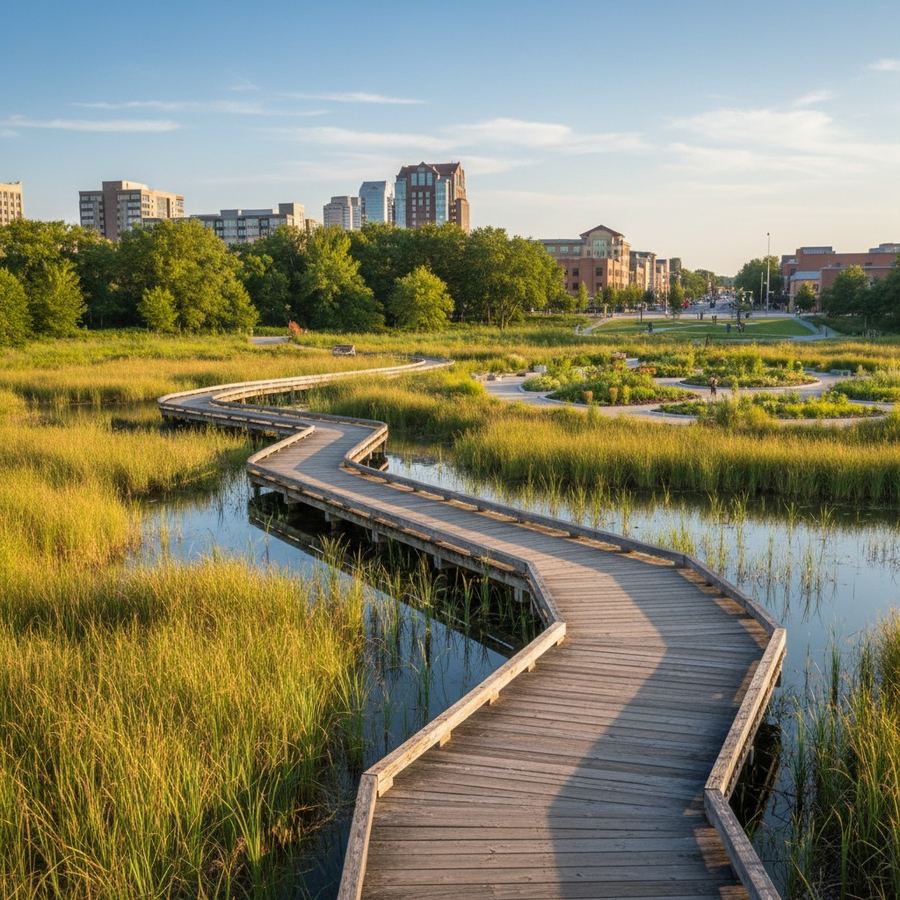
Signage and Wayfinding
8. Are trail intersections marked clearly? Every junction should indicate which direction leads where, ideally with distance estimates. A trail user who has never visited before should be able to navigate the system without a phone. If you find yourself standing at a fork with no indication of what lies in either direction, the signage has failed.
9. Are trailheads visible and well-signed from the road? A trailhead that is hidden behind a building or unmarked from the nearest street might as well not exist for casual users. The best systems have consistent, branded signage that makes entry points obvious.
10. Is there a posted map at major access points? Even in the era of smartphones, a posted map at trailheads gives users a sense of the full network and reduces the likelihood of someone heading out unprepared. It also signals that someone is paying attention to the system as a whole.
Safety and Comfort
11. Is the trail separated from vehicle traffic at road crossings? Check whether crossings have marked crosswalks, signage for motorists, or signal-controlled intersections. A trail that forces users across a four-lane road at an unmarked point has a serious design flaw.
12. Is lighting provided in areas used after dark? Not every trail needs lighting, but trails that pass through urban areas or serve as commuting routes should have it. Unlit tunnels, underpasses, and isolated stretches discourage evening use and raise legitimate safety concerns. For more on the relationship between lighting, darkness, and community design, the balance between safety lighting and ecological sensitivity is worth understanding.
13. Are sight lines clear at curves and intersections? Overgrown vegetation at trail bends or where trails meet roads creates blind spots. Regular trimming is a basic maintenance task that directly affects user safety, especially where cyclists and pedestrians share the path.
14. Is the trail wide enough for its traffic volume? A trail handling heavy mixed use, walkers, runners, cyclists, and families, needs to be at least three meters wide. Anything narrower invites conflict and discourages less confident users from participating.
Accessibility
15. Can a person using a wheelchair or mobility device use the trail? Accessibility is not a bonus feature. Check whether the trail surface, grade, and cross-slope meet basic accessibility standards. Look for barriers like steps, narrow gates designed to block vehicles that also block wheelchairs, and abrupt transitions between surfaces.
16. Are rest areas and seating provided at reasonable intervals? Benches, rest areas, and shade structures matter for older adults, people with mobility limitations, and families with young children. A trail that offers no place to sit for two kilometers is poorly designed for a significant portion of the population that might otherwise use it.
Maintenance and Stewardship
17. Is there a visible maintenance schedule? Mowed edges, cleared debris, repaired surfaces, and emptied waste bins are signs of active maintenance. If you see overflowing garbage cans, downed branches blocking the path, or graffiti that has been there for months, maintenance is likely underfunded or uncoordinated.
18. Is winter maintenance provided on key routes? In northern climates, a trail that closes entirely from November to April is only half a trail. The most functional systems provide snow clearing on at least the primary commuting and connecting routes. This is one of the clearest indicators of whether a municipality treats its trails as real infrastructure or as a seasonal amenity.
19. Are there channels for reporting problems? A phone number, an email address, or a simple online form for reporting trail issues indicates active management. If there is no obvious way to report a fallen tree or a damaged bridge, problems persist until someone with authority happens to notice them.
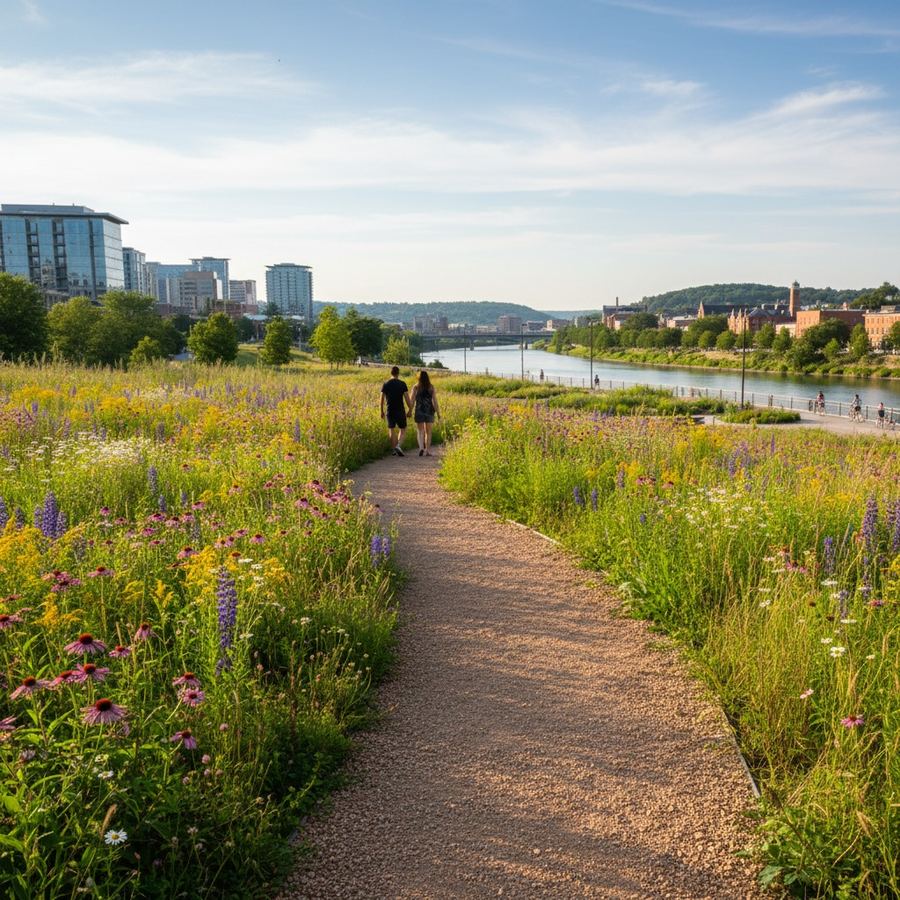
Community Value
20. Do people actually use the trail? This is the simplest and most important question. Visit at different times of day and on different days of the week. A well-designed, well-maintained trail will have regular users: commuters in the morning, families on weekends, dog walkers in the evening. If a trail is consistently empty, something is wrong, whether it is location, connectivity, safety, or simply the fact that nobody knows it exists.
Using This Checklist
No trail system will score perfectly on every item. The goal is not perfection but awareness. Understanding where a system falls short is the first step toward advocating for improvements that matter. If you are attending a municipal budget meeting, a parks and recreation consultation, or a public planning session, bringing specific observations from a checklist like this is far more effective than general praise or vague complaints.
Strong trail networks are a hallmark of communities that take public space seriously. For broader context, see our coverage of nature integrated into urban life and the guide to reading municipal improvement plans that may include trail components.