The word "revitalization" does a lot of work in municipal politics. It implies renewal and transformation. It suggests that the end result will be better for everyone.
Sometimes that is exactly what happens. And sometimes "revitalization" means a developer receives public subsidies to build something profitable on land that previously served a different public function. The word tells you nothing about which outcome to expect. Only the details can, and the details are often buried beneath renderings and political enthusiasm.
Before you support, oppose, or accept a revitalization project, these are the questions worth asking.
Who Benefits?
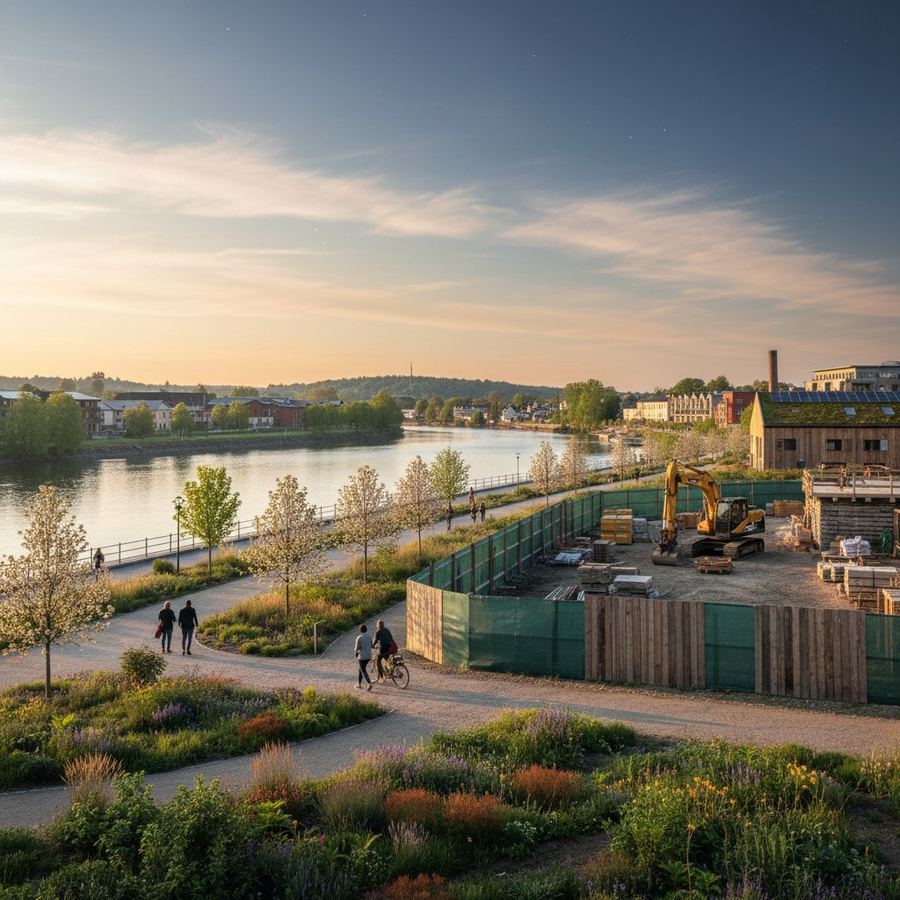
Who is the project designed to serve? A revitalization that adds luxury condominiums and upscale retail serves a different population than one that adds affordable housing and improved transit. Both might be called "revitalization." The difference is who benefits.
Will existing residents and businesses benefit, or will they be displaced? Rising property values mean rising rents and rising costs of doing business. If the project pushes out the people who currently live and work in the area, it is not revitalizing the community. It is replacing it.
Are the benefits distributed across the community, or concentrated in one area? A project that improves the waterfront while diverting maintenance funding from neighborhood parks has not created a net gain. It has relocated investment. Look at whether the project improves the overall quality of public space or simply shifts attention and resources from one part of town to another.
What Is Actually Being Built?
What does Phase 1 include, and what is deferred? The items in Phase 1 are the only ones you can be confident will be built. If the public amenities are all in Phase 3, contingent on future funding, there is a meaningful chance they will never materialize. The private development in Phase 1 will be built regardless.
What is the ratio of public space to private development? A project that converts ten acres of public waterfront into eight acres of private development and two acres of public promenade is a net loss of public land, even if the two acres are beautifully designed. Ask for the numbers: how much of the project area will remain publicly owned and publicly accessible?
What happens to existing public space? Some revitalization projects eliminate or reduce existing parks, green spaces, or public access points in the process of building something new. A new plaza does not compensate for the loss of a mature tree canopy that took fifty years to grow. Ask whether the project preserves, enhances, or diminishes existing public assets.
How Is It Being Paid For?
What public money is involved? Revitalization projects frequently involve public subsidies: tax increment financing, development charge exemptions, grants, below-market land sales, or direct capital investment. These are not inherently problematic, but they represent public money being spent on specific outcomes, and residents have every right to ask whether those outcomes serve the public interest.
What are the ongoing costs? A new waterfront park costs money to maintain. A new community facility costs money to operate. If the project creates public amenities without identifying how they will be funded in perpetuity, those amenities will deteriorate. Ask about the operating budget, not just the capital budget.
Who bears the financial risk? In public-private partnerships, the allocation of risk determines who loses money if the project underperforms. If the private partner is guaranteed a return while the municipality absorbs the downside risk, the arrangement is less a partnership than a subsidy. Look for the risk-sharing terms in the project agreement.
What Do the Renderings Hide?
Are the renderings consistent with the site plans? Renderings are marketing tools. The site plan, which shows actual dimensions, building footprints, and road configurations, tells a more honest story. A promenade that looks generous in a rendering may be four meters wide in reality.
What season is depicted? Most renderings show summer. In communities with six months of cold weather, the experience of a space in January matters as much as its experience in July. Ask how the space will function in winter: will paths be cleared, will seating be usable, will the space have any reason to draw people when the temperature drops?
Where are the cars? Renderings frequently minimize or eliminate vehicles. If the project includes a parking structure, surface lots, or increased traffic volume, those elements should be visible in the design documents even if the renderings tactfully omit them. Understanding the language and structure of improvement plans makes it easier to see past the renderings to the actual proposal.
Was the Public Genuinely Consulted?
What did the public engagement process look like? Consultation that happens after the design is complete is not consultation. It is notification. Genuine engagement involves presenting options, not finished plans, and demonstrating that input changed the outcome.
Who participated? If the process reached primarily homeowners and business owners, it does not represent the full community. Ask whether renters, young people, and lower-income residents were deliberately included.
Is there a formal mechanism for ongoing public input? Projects evolve during implementation. Designs change. Budgets shift. Phases are reordered or cancelled. A project that includes a community advisory committee or regular public reporting is more accountable than one where the last public meeting was the groundbreaking ceremony.
What About the Environment?
Were environmental assessments completed, and what did they find? Projects near waterfronts, wetlands, rivers, or natural areas should have environmental assessments. Ask whether those assessments identified concerns and whether the project design addresses them. An assessment that identifies significant habitat and a design that ignores that finding is a red flag.
Does the project increase or decrease permeable surface? Replacing a parking lot with a park increases permeable surface, which is good for stormwater management. Replacing a vacant lot with a building and a paved plaza decreases it. The direction of change tells you something about the project's environmental impact at the most basic level.
What happens to existing trees? Mature trees provide ecosystem services that take decades to replace. A project that removes significant tree canopy and promises to plant replacements is making a trade that will take thirty to fifty years to break even. The glossary on this site covers terms like canopy cover and ecosystem services that are relevant to evaluating these claims.
What Is the Track Record?
Has the developer or municipality delivered on similar promises before? Past performance is the most reliable predictor of future results. If the same developer promised public amenities in a previous project and failed to deliver them, that pattern is likely to repeat. If the municipality has a history of underfunding maintenance on new facilities, the same outcome is probable here.
Are the commitments legally binding? A promise made at a public meeting is not a commitment. A condition written into a development agreement, a site plan approval, or a zoning bylaw is. Ask where the public benefits are documented and what enforcement mechanisms exist if the developer fails to deliver.
A Note on Skepticism
Asking these questions does not make you a cynic. Most revitalization projects include genuine improvements alongside elements that serve private interests. The goal is to ensure that public resources and public land are invested wisely.
The projects that survive informed scrutiny are the ones worth supporting. The ones that rely on enthusiasm and a lack of public attention warrant the most careful examination.
For additional frameworks, the guide to community group advocacy describes how organized residents can engage constructively with these processes. The analysis of small-town main streets and green space offers context for understanding what actually makes downtown improvements work. And the trail system checklist provides a model for the kind of specific, practical evaluation that separates useful public comment from well-meaning generality.