The conversation about small-town main streets usually centers on retail. Which storefronts are empty. Whether the downtown can compete with the highway commercial strip. How to attract a coffee shop, a bookstore, or whatever anchor tenant might convince people to park and walk around for an hour. These are real concerns, but they miss something fundamental about what makes a main street feel worth visiting in the first place.
The main streets that work, that draw people on foot, that feel like genuine public places rather than just a row of buildings with a road in front of them, share a set of physical characteristics that have very little to do with which businesses occupy the ground floors. They have shade. They have greenery. They have places to sit. They have a width and scale that makes walking feel natural rather than uncomfortable. And they have some connection, even a modest one, to green space, water, or the surrounding landscape.
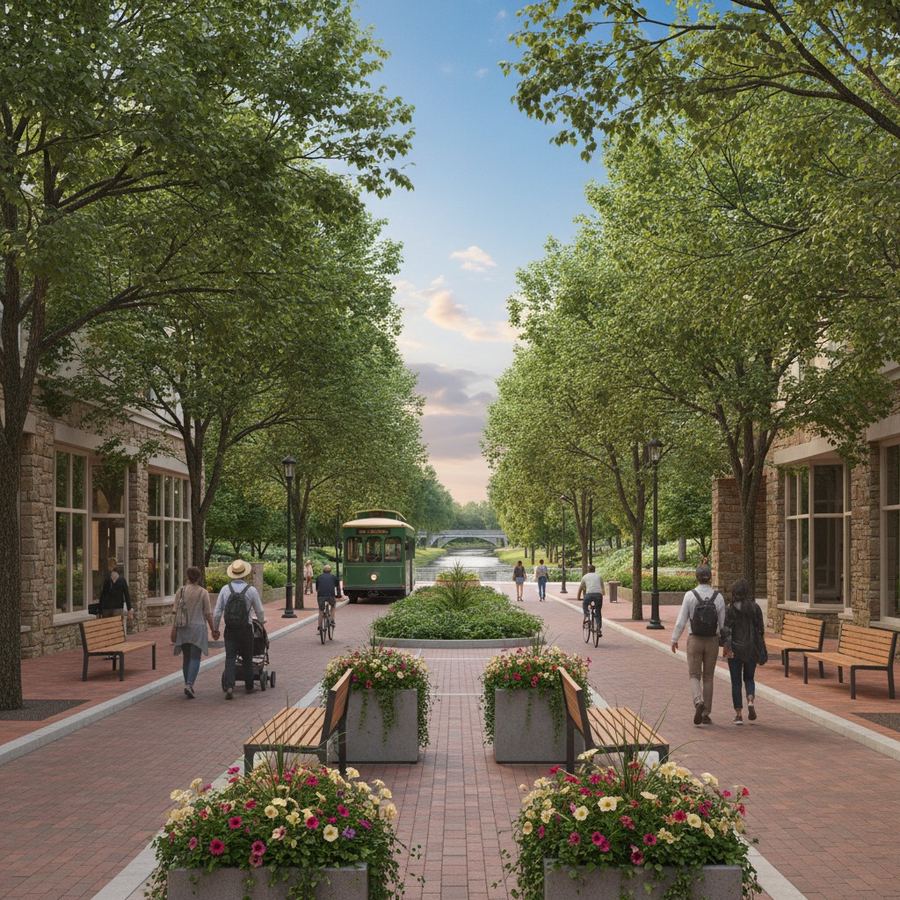
The Shade and Seating Problem
Walk down the main street of almost any small Ontario town in July, and one of the first things you will notice is the absence of shade. The sidewalks are often narrow. The street trees, if they exist at all, were planted recently and offer minimal canopy. There are few benches and fewer reasons to linger.
This is not a cosmetic issue. A main street without shade is a main street that people walk through quickly on their way to an air-conditioned car or building. The economic argument for shade is straightforward: people who are comfortable stay longer, and people who stay longer spend more money. But the civic argument is equally important. A main street is public space. It belongs to everyone. And public space that is physically uncomfortable for half the year is public space that fails at its most basic function.
Communities like those profiled at collingwood.net have demonstrated that investing in streetscape improvements, including mature tree planting, wider sidewalks, and integrated seating, transforms main-street activity. Collingwood's downtown is often cited as one of the more walkable small-town cores in the province, and the presence of greenery is a significant part of why.
What Green Space Does on a Main Street
Green space on or adjacent to a main street serves multiple purposes that are easy to underestimate. Street trees reduce ambient temperature by several degrees in summer. Planters and garden beds soften the visual dominance of pavement and parking. Small parks or green areas adjacent to the commercial strip provide destinations for people who are not shopping but whose presence contributes to the vitality of the street.
The most effective main-street green space is not ornamental. It is functional. A well-placed tree provides shade for a bench, which provides a place for someone to sit while their partner shops, which means the couple stays downtown instead of driving to the box store where there is plenty of parking and air conditioning. A small green at the end of the main street provides a place for children to play, which means families visit. A rain garden or bioswale at the curb manages stormwater while adding visual interest, replacing the standard concrete curb and gutter with something that actually does ecological work.
The town of Owen Sound has pursued this integration with notable results. As documented through community resources like owensound.com, the connection between the downtown core and the surrounding natural features, including the Sydenham River and its associated trail system, gives the main street a context that purely commercial corridors lack. The river is not decoration. It is infrastructure that makes the downtown a better place to be.
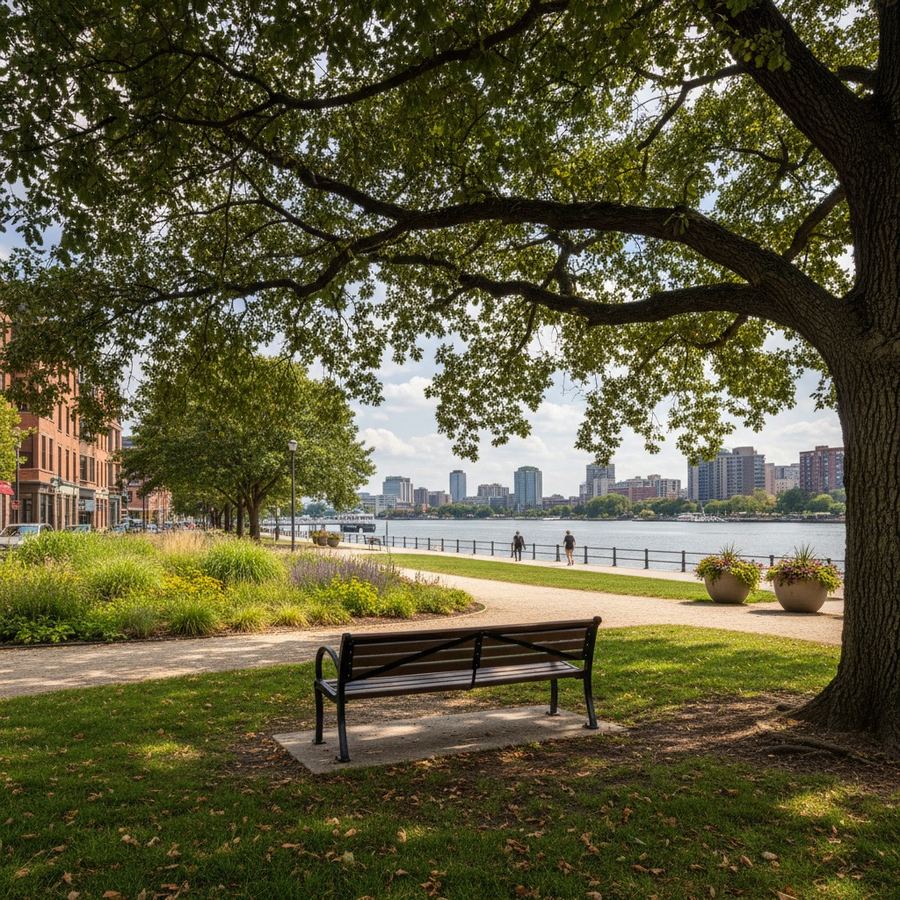
Scale Matters More Than Style
The architectural character of a main street matters, but less than most people assume. What matters more is scale: the width of the sidewalk relative to the road, the height of the buildings relative to the street, and the distance between points of interest. A main street where the sidewalk is barely wide enough for two people to pass, where the road is four lanes of traffic, and where the nearest bench is a block away is a main street designed for cars, regardless of how charming the building facades might be.
The best small-town main streets tend to have certain proportions. The road is typically two lanes, sometimes with angle parking. The sidewalk is wide enough for a cafe table, a bench, and a tree without forcing pedestrians into single file. The buildings are two to three stories, which creates a sense of enclosure without making the street feel like a canyon. These proportions existed by default in towns built before the automobile, and recreating them in towns that were expanded or rebuilt in the car era is one of the most impactful things a municipality can do.
Connecting the Street to the Landscape
The most memorable small-town main streets do not exist in isolation. They connect to something: a waterfront, a park, a trail, a river, a view of the surrounding countryside. This connection is what distinguishes a main street from a strip mall. It is the sense that the town exists in a place, with a geography and a natural setting, rather than being an interchangeable collection of commercial units.
Smaller communities in Ontario's near-north demonstrate this well. Burks Falls, for instance, maintains a direct relationship between its compact commercial core and the surrounding natural environment. As highlighted through burksfalls.com, the town's identity is inseparable from its landscape setting, and the main street benefits from that connection in ways that larger, more sprawling communities often struggle to replicate.
This connection does not require dramatic topography or a scenic waterfront, though those help. Even a simple greenway linking the end of the main street to a neighborhood park, or a view corridor that lets you see trees from the sidewalk, reinforces the sense that the town is part of a larger living system rather than an island of pavement.
What Actually Helps: A Short List
Based on the communities that have gotten this right, the interventions that make the most difference on a small-town main street are not complicated. They are:
Mature trees, not saplings. Investing in larger caliper trees that provide meaningful shade within a few years rather than decades. This costs more upfront and delivers faster results.
Wider sidewalks. Even gaining one meter of sidewalk width changes the experience of walking. Narrowing the road by one lane or reducing lane widths can achieve this without major reconstruction.
Seating that is not an afterthought. Benches placed in shade, facing something worth looking at, spaced at intervals that accommodate older adults and people with mobility limitations. This includes removing the hostile design features, armrests designed to prevent lying down, backless benches, seats made of materials that become painfully hot in direct sun, that some municipalities have adopted.
Green connections. A trail, a path, a planted corridor that links the main street to nearby green space, water, or residential areas on foot. The role of river corridors in connecting commercial areas to natural systems is well documented and applies directly to small-town main streets.
Reduced car dominance. This does not mean eliminating parking. It means ensuring that the street is designed for people first and cars second, through narrower lanes, visible crosswalks, curb extensions at intersections, and parking configurations that do not dominate the visual experience of the street.
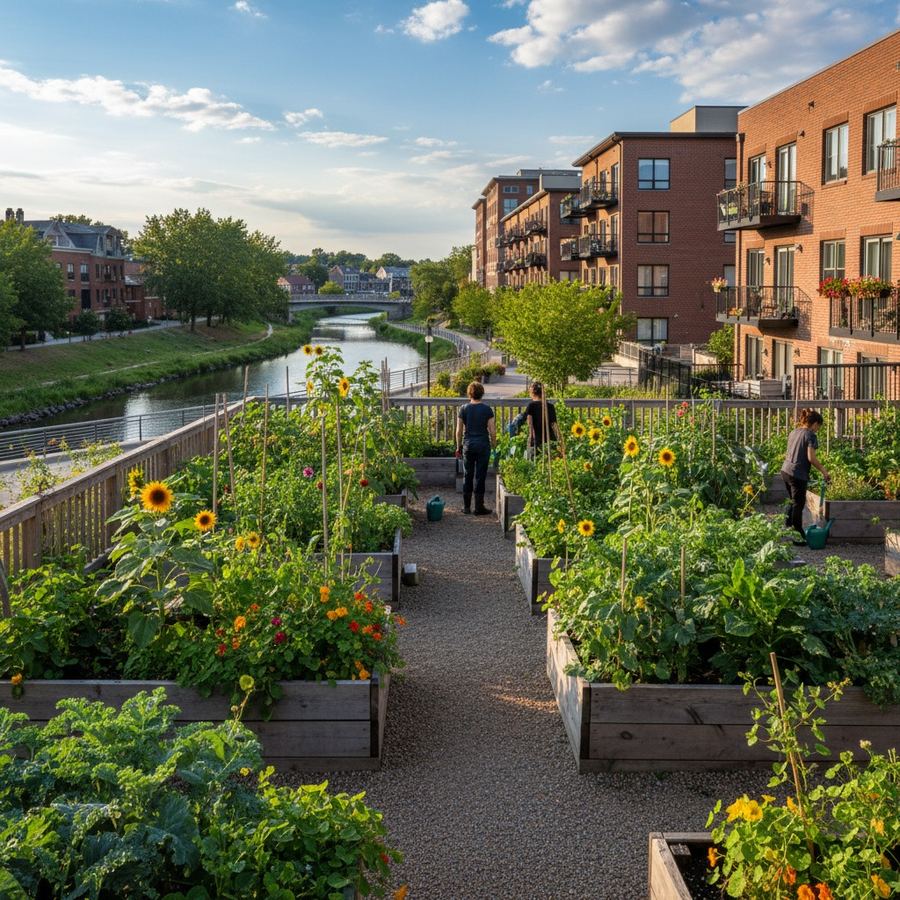
The Broader Pattern
The towns that invest in their main streets as green, walkable public spaces tend to see returns beyond foot traffic and retail sales: stronger community identity, better public health outcomes, and greater resilience to economic shifts. A main street that works as a public place continues to work even when individual businesses turn over, because people come for the experience of being there.
The best examples of nature integrated into urban life consistently involve places where green space, walkability, and commercial activity reinforce each other. And the questions to ask about revitalization projects apply directly to main-street improvement proposals, where the difference between genuine investment and a superficial facelift comes down to whether anyone asked hard questions early.
The lesson from the small towns that get this right is consistent: the greenery is not the garnish. It is the foundation.