In almost every city with a waterfront, the same tension plays out. The land along the water is some of the most desirable real estate in the region. Developers want to build on it. Residents want to walk along it. City officials want the tax revenue from development and the public goodwill from access. The result is a negotiation that shapes the character of the city for generations.
How that negotiation is resolved determines not just who gets to enjoy the water but what kind of city emerges around it. This is not an abstract policy debate. It is playing out right now in hundreds of communities, and the outcomes vary enormously depending on the legal framework, the political will, and the design choices that each city makes.
The Historical Pattern
Through the 19th century and into the mid-20th century, most urban waterfront land was industrial. Ports, rail yards, and factories occupied the water's edge. Public access was not a consideration because the waterfront was a workplace.
As industry moved out of city centers, these waterfronts became available for redevelopment. The early wave, in the 1970s and 1980s, was dominated by festival marketplaces and tourism-oriented projects. Baltimore's Inner Harbor is the canonical example. Public access was part of the package, but it was tied to commercial activity.
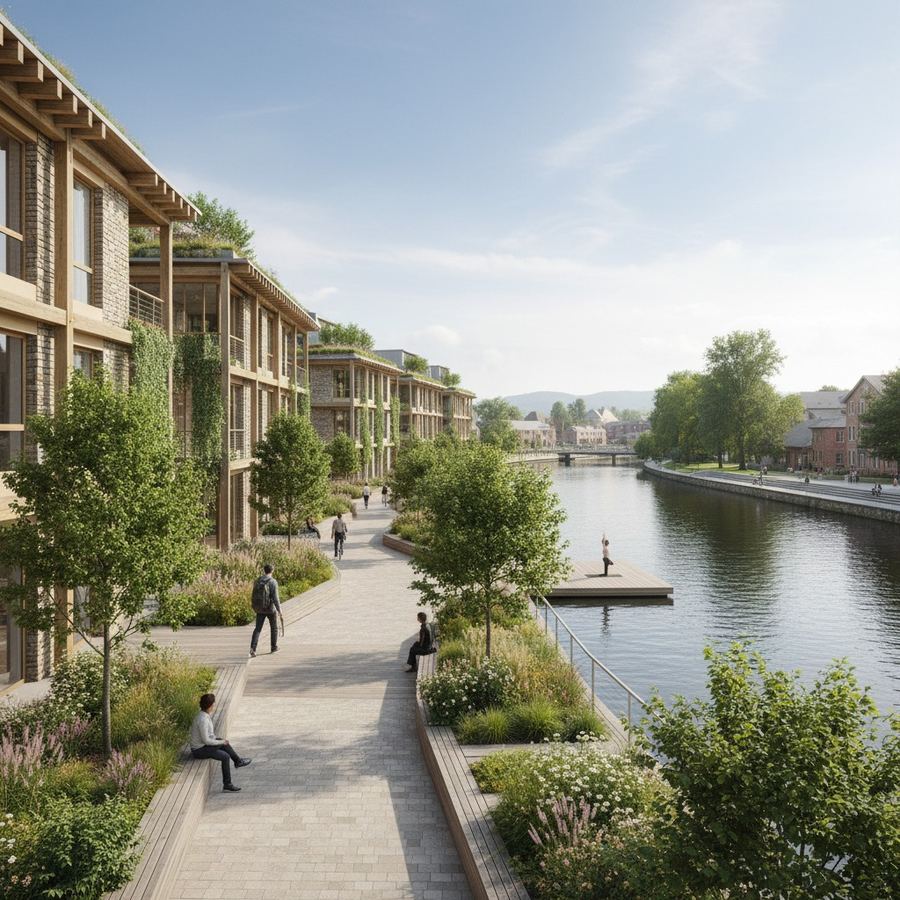
The current era is more complex. Waterfront land is being developed for luxury residential, offices, hotels, and mixed-use projects. The question of public access has become more contentious because the stakes are higher. A mile of waterfront in a major city might be worth hundreds of millions of dollars. Every foot of public easement is a foot that cannot be privatized.
The Legal Landscape
The legal framework for waterfront access varies significantly by state. In some states, the public trust doctrine provides a strong foundation. This doctrine, rooted in Roman law, holds that navigable waterways and the land beneath them are held in trust for the public. The state cannot simply sell the public's right to access these waters.
California has some of the strongest protections in the country. The California Coastal Commission, created by voter initiative in 1972, can require public access as a condition of coastal development permits. New Jersey's public trust doctrine, affirmed in the 1821 case Arnold v. Mundy, establishes that the public has a right to access tidal waterways and adjacent dry sand beaches.
Other states provide much weaker protections. In many inland states, the public trust doctrine applies only to navigable waterways, and the definition of navigability is often narrow. A community that relies on developer goodwill to provide waterfront access, rather than on a legal requirement, will generally end up with less access and less continuity.
How Privatization Happens
The most obvious form of waterfront privatization is a gated residential development built to the water's edge. This still happens, but most waterfront privatization is more subtle.
One common pattern is the nominal public walkway. A developer provides a path along the water as a condition of approval. The path is technically open to the public. But it is narrow, poorly signed, lined with private patios, and accessible only through a single unmarked entrance. The legal requirement is met. The functional access is minimal.
New York City's experience with Privately Owned Public Spaces illustrates this dynamic. Research by Jerold Kayden at Harvard found that many such spaces were poorly maintained, difficult to find, or actively hostile to public use. The fundamental tension remains: a public space controlled by a private entity will tend to serve the private entity's interests unless there is strong, ongoing oversight.
Another pattern is the access gap. A city secures public access along most of its waterfront but allows a few parcels to develop without it. Those gaps break the continuity of the public edge. A waterfront walkway that dead-ends at a private building and forces users onto a busy road is a significantly less useful piece of infrastructure than a continuous path.
What Works
Cities that have maintained strong public waterfront access share several characteristics.
First, they establish a clear legal or regulatory requirement for continuous public access. Portland, Oregon requires public access along the Willamette River as a matter of zoning code, not as a negotiable amenity. When access is a requirement rather than an incentive, it happens consistently.
Second, they invest in public ownership of key waterfront parcels. Chicago's decision to maintain public ownership of its lakefront is the most dramatic example. The city's 18 miles of publicly owned lakefront exists because Chicago chose public ownership over private development, resisting enormous financial pressure over more than a century.
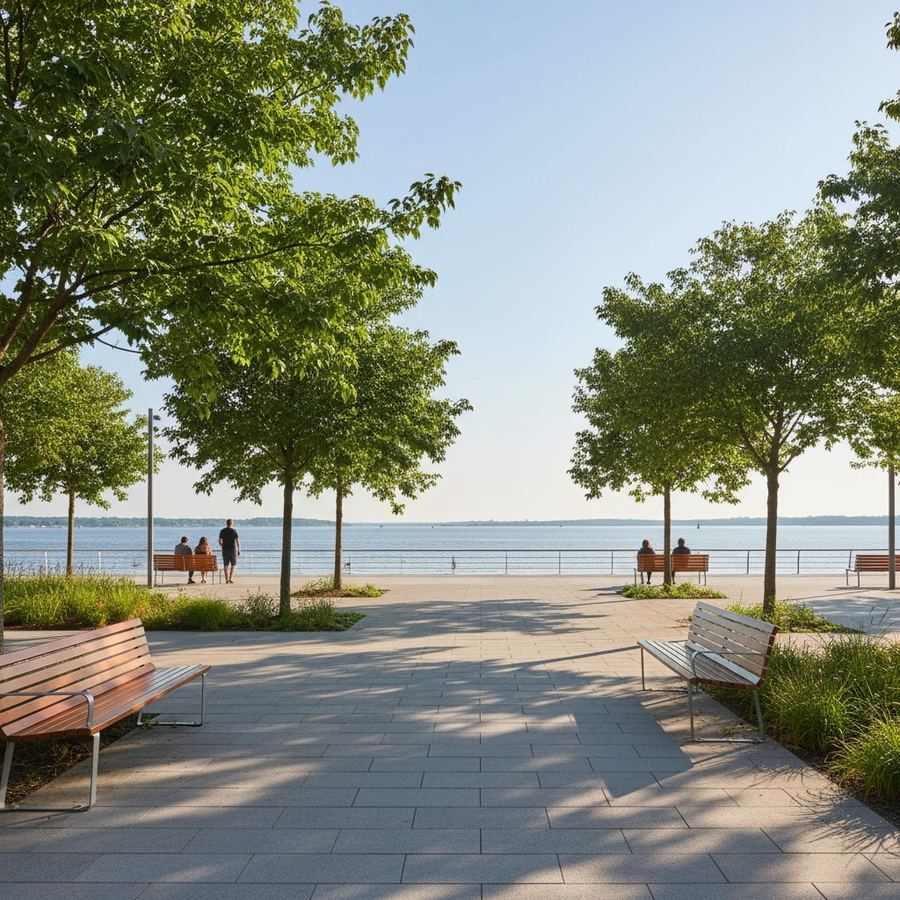
Third, they design public spaces that assert their public character. A waterfront park with signage, programming, seating, and maintenance that signals civic ownership is harder to encroach upon than a vaguely defined open space. Hudson River Park in Manhattan, whatever its flaws, reads as unambiguously public. The contrast with the semi-private waterfront spaces in many newer developments is stark.
The Equity Dimension
Waterfront access is not just a question of recreation. It is a question of who benefits from a city's most valuable natural asset. In cities where the waterfront is largely privatized, the benefits flow to property owners and their guests. In cities where the waterfront is public, the benefits are shared across the population.
The equity implications are sharpened by the fact that waterfront development often displaces lower-income residents. A new luxury development along a river may include a public walkway, but if the surrounding neighborhood has been transformed from affordable housing to high-end condominiums, the walkway serves a very different population. Public access without broader public space strategy can become a fig leaf for displacement. The question is not just whether the public can physically reach the water but whether the waterfront functions as a genuinely shared civic space.
What Communities Can Do
For communities facing waterfront development pressure, several practical steps can protect public access.
Establishing a continuous public access requirement in the zoning code, not as a discretionary condition but as a standard, is the most important single action. The requirement should specify minimum widths, public signage, maintenance responsibilities, and enforcement mechanisms.
Mapping and protecting access points before development proposals arrive is much easier than negotiating them afterward. A community that identifies and secures the key access points to its waterfront in advance has a much stronger position than one that responds to each proposal individually.
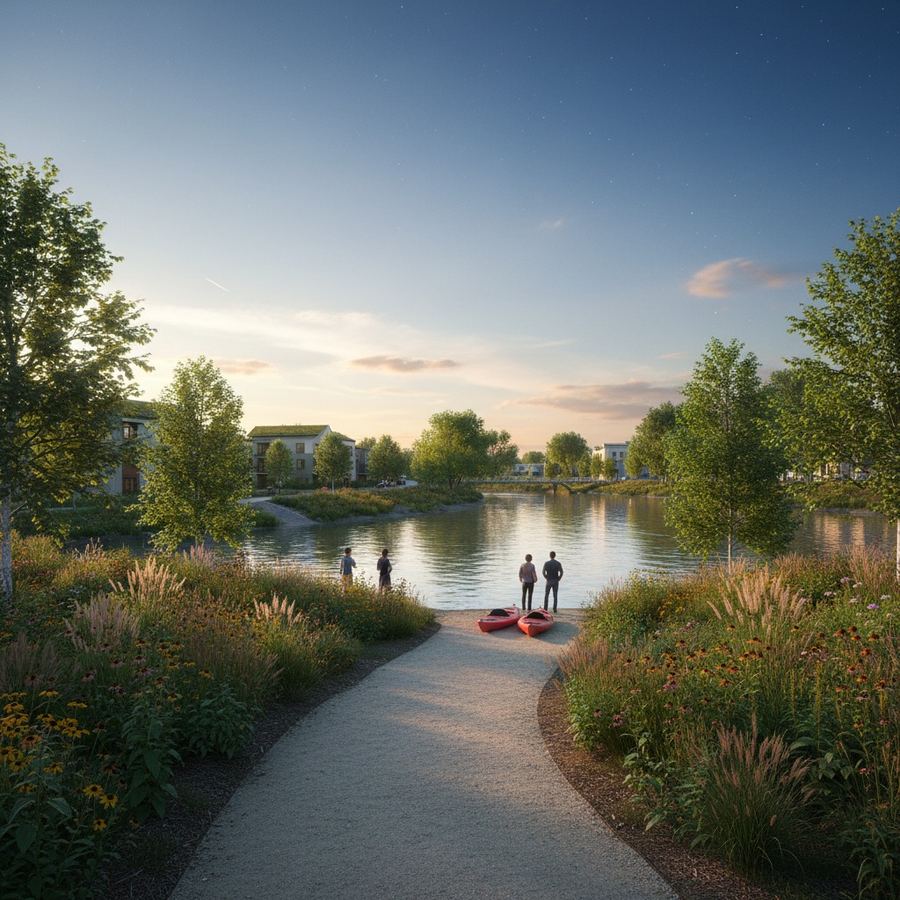
Insisting on genuine connectivity, not just nominal access, requires attention to design details. Does the public path connect to the broader trail and sidewalk network? Is it wide enough to function as a real public space? These questions separate meaningful access from a checked box on a development approval.
Understanding what is actually proposed in waterfront development plans requires citizens willing to read the documents and ask specific questions about access width, continuity, and enforcement. The details of a waterfront access agreement matter enormously, and they are often settled in planning sessions that few residents attend.
The basic principle is straightforward. Water edges in cities are public assets. The ecological functions of the shoreline serve the entire community. The views, the breezes, and the simple pleasure of being near water are not commodities that should be available only to those who can afford adjacent real estate. A city that allows its waterfront to be privatized has given away something it cannot get back.
The waterfront is a test of a city's values. Whether the water belongs to everyone or only to the fortunate few is a choice, and it is one that every generation of civic leaders must make again.