Almost every city in the world exists because of a river. Rivers provided water, transportation, power, and fertile land. Then, as cities industrialized, rivers became dumping grounds, open sewers, and obstacles to be bridged, channelized, or buried. For much of the twentieth century, the standard relationship between a city and its river was one of neglect at best and active hostility at worst.
That relationship is changing. Cities across the world are recognizing that their rivers are not liabilities to be managed but assets to be restored. A healthy river corridor, with intact riparian vegetation, public access, and connected trail systems, functions simultaneously as ecological infrastructure, recreational space, transportation corridor, and economic driver. Few other investments offer that combination.
The Ecological Spine
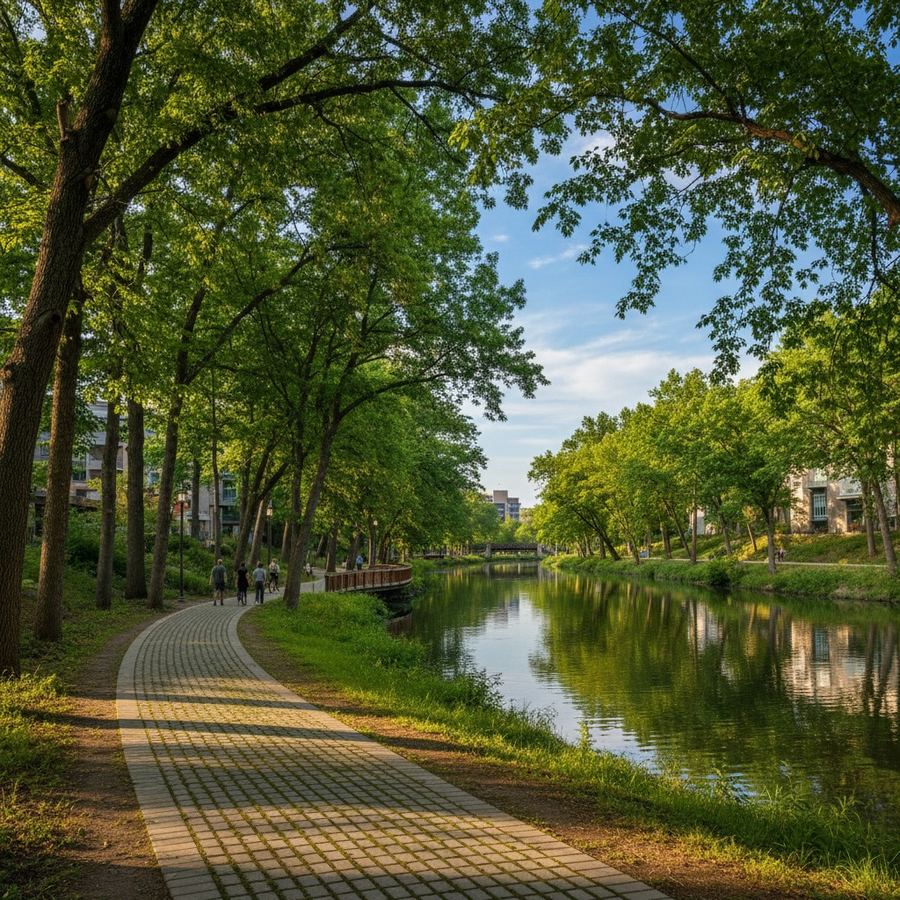
A river corridor is, by its nature, a linear ecosystem that connects upland areas, wetlands, floodplains, and the waterway itself. When the vegetation along a river is intact, that corridor provides habitat for fish, birds, amphibians, mammals, and insects. It filters pollutants from runoff before they reach the water. It stabilizes banks against erosion. It moderates flooding by absorbing and slowing floodwaters across the floodplain.
These are not abstract ecological benefits. A city with a well-vegetated river corridor has measurably better water quality downstream, reduced flood damage during storms, and more diverse wildlife populations than a city that has stripped its riverbanks to bare earth or concrete. The Nature Conservancy has documented the economic value of natural floodplain function, finding that every dollar invested in floodplain restoration can return multiple dollars in avoided flood damage and water treatment costs.
For cities thinking about urban biodiversity, river corridors are the single most important structural element. They connect urban green spaces to the larger landscape, allowing wildlife to move between habitats that would otherwise be isolated by development. A river corridor is, in effect, a highway for nature through the heart of a city.
Recreation and Access
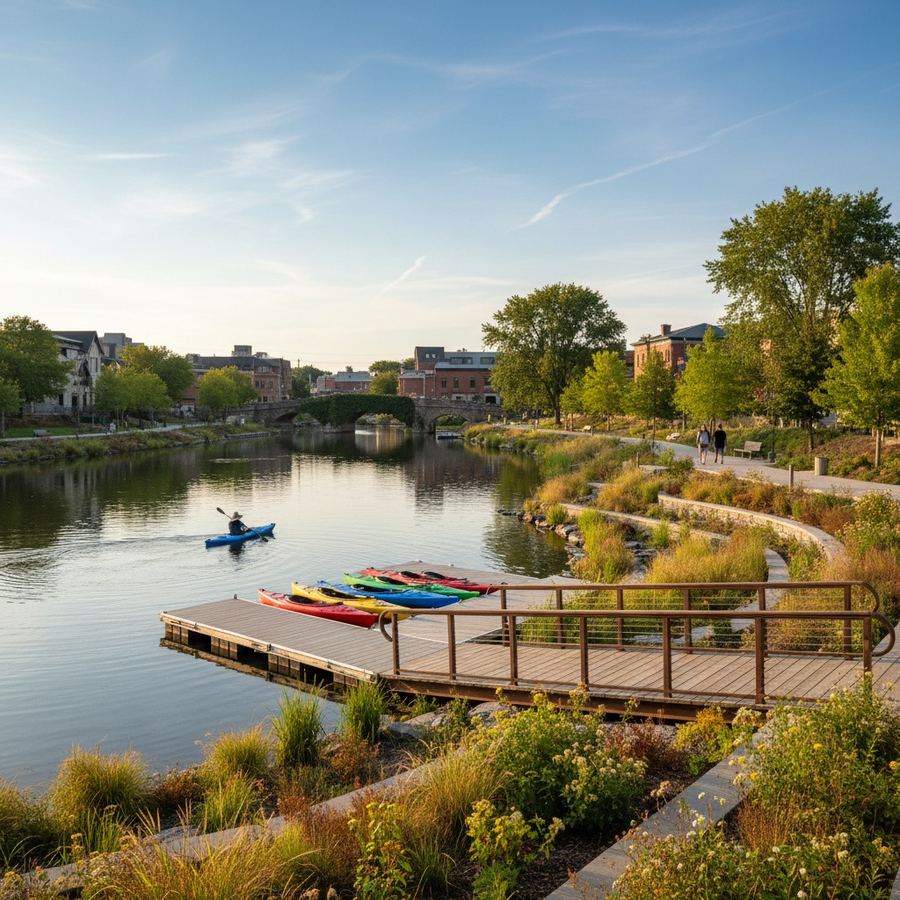
River corridors are natural locations for trail systems, and many of the most successful urban trail networks in the country follow rivers. The appeal is obvious: river trails offer flat grades, scenic views, shade from riparian trees, and a sense of being in nature even within a city. They attract walkers, runners, cyclists, kayakers, and anglers, often on the same corridor.
The question of public access along urban rivers is critical. In many cities, private development has claimed the riverfront, leaving residents with limited or no ability to reach the water. Communities that prioritize public access along their river corridors, through easements, setback requirements, and trail development, create shared amenities that serve the entire population rather than a privileged few.
The recreational value of river corridors is closely tied to their ecological health. A trail along a channelized, treeless ditch is a different experience than a trail through a restored riparian forest with clear water, birdsong, and shade. Investing in ecological restoration and recreational access simultaneously produces results that are greater than either investment alone.
Stormwater and Flood Resilience
Rivers flood. This is not a failure of the river. It is what rivers do. The failure lies in how cities have built around rivers, often filling floodplains with development and then spending enormous sums trying to keep the water out.
A more resilient approach treats the river corridor as a dynamic system. It preserves or restores floodplain areas where water can spread during high flows. It maintains vegetated buffers that slow runoff and trap sediment. It uses green infrastructure throughout the watershed to reduce the volume and velocity of water reaching the river during storms.
This approach requires land, and land in cities is valuable. But the comparison is not between a vacant floodplain and a developed one. The comparison is between a floodplain that functions as a park, trail corridor, and ecological asset versus the cost of flood damage, emergency response, infrastructure repair, and insurance claims that come with building in areas the river periodically reclaims. Communities that have done the math increasingly find that preserving and restoring floodplain function is the more cost-effective path.
Economic Catalysts
Restored river corridors drive economic development in patterns that are well documented. Property values rise near restored waterfronts and river trails. Businesses locate in areas where employees have access to attractive outdoor spaces. Tourism and recreation spending flows into communities with quality river access. The San Antonio River Walk, the Boise Greenbelt, and countless smaller river trail projects across the country all demonstrate this pattern.
The economic effects extend beyond adjacent properties. A river corridor that functions as a trail network spine increases the value and connectivity of parks, neighborhoods, and commercial areas throughout the city. It becomes an organizing feature of the community, a linear commons that gives the city identity and structure.
Small Cities and Towns
River corridor investments are not just for large cities with big budgets. Many of the most compelling examples come from smaller communities that recognized their river as their greatest untapped asset. A small town that cleans up its riverbank, builds a simple trail, provides a canoe launch, and plants native trees along the corridor can transform its identity and economic prospects with a modest investment.
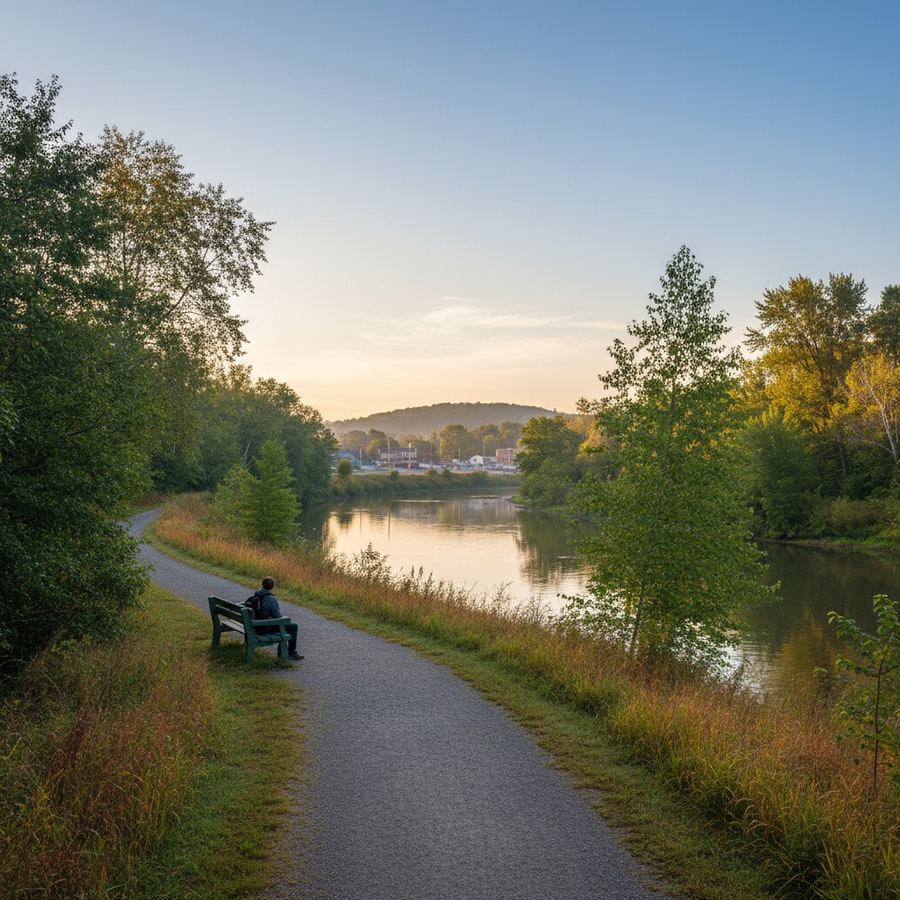
The key is to approach the river corridor as a system rather than a series of isolated projects. A trail segment here, a park there, and a boat launch somewhere else produce less value than a connected corridor plan that links those elements into a coherent whole. Even if implementation happens in phases over many years, having a clear vision for the corridor ensures that each investment builds on the last.
Starting Points
Communities looking to improve their relationship with their river corridors can start with a few practical steps. Walk the corridor and document conditions: where public access exists and does not, where vegetation is intact and where it has been cleared, where the water is clean and where pollution sources are visible. Review local zoning and setback requirements along the waterway. Look at what neighboring communities have done with similar rivers. Connect with state and federal programs that fund riparian restoration and trail development.
Rivers shaped where cities were built. Now, how cities treat their rivers will shape how livable those cities remain. A community that invests in its river corridor invests in its ecological health, its resilience to flooding, its recreational quality, and its long-term economic vitality. Few other investments work on that many levels at once.