Green infrastructure is one of those terms that gets used constantly in planning documents and city council presentations but rarely gets explained in a way that makes sense to anyone who is not already in the field. The concept is simpler than it sounds: green infrastructure uses plants, soil, and natural processes to manage water, cool air, and support ecosystems in places where we would otherwise rely entirely on pipes, concrete, and mechanical systems.
This is not a replacement for traditional infrastructure. Sewers, stormwater pipes, and water treatment plants remain essential. Green infrastructure works alongside those systems, reducing the load on them, improving their performance, and adding benefits that gray infrastructure simply cannot provide on its own.
Rain Gardens
A rain garden is a shallow, planted depression designed to collect and absorb runoff from roofs, driveways, and streets. Instead of sending that water directly into a storm drain, a rain garden holds it temporarily and lets it soak into the ground, filtered by soil and plant roots along the way.
The plants in a rain garden are typically native species chosen for their ability to tolerate both wet and dry conditions. Sedges, rushes, native grasses, and wildflowers are common. The garden handles most rainfall events entirely on its own, only overflowing into the storm system during the heaviest downpours. In a city where stormwater runoff carries pollutants like motor oil, fertilizer, and sediment into rivers and lakes, rain gardens intercept those pollutants before they reach the waterway.
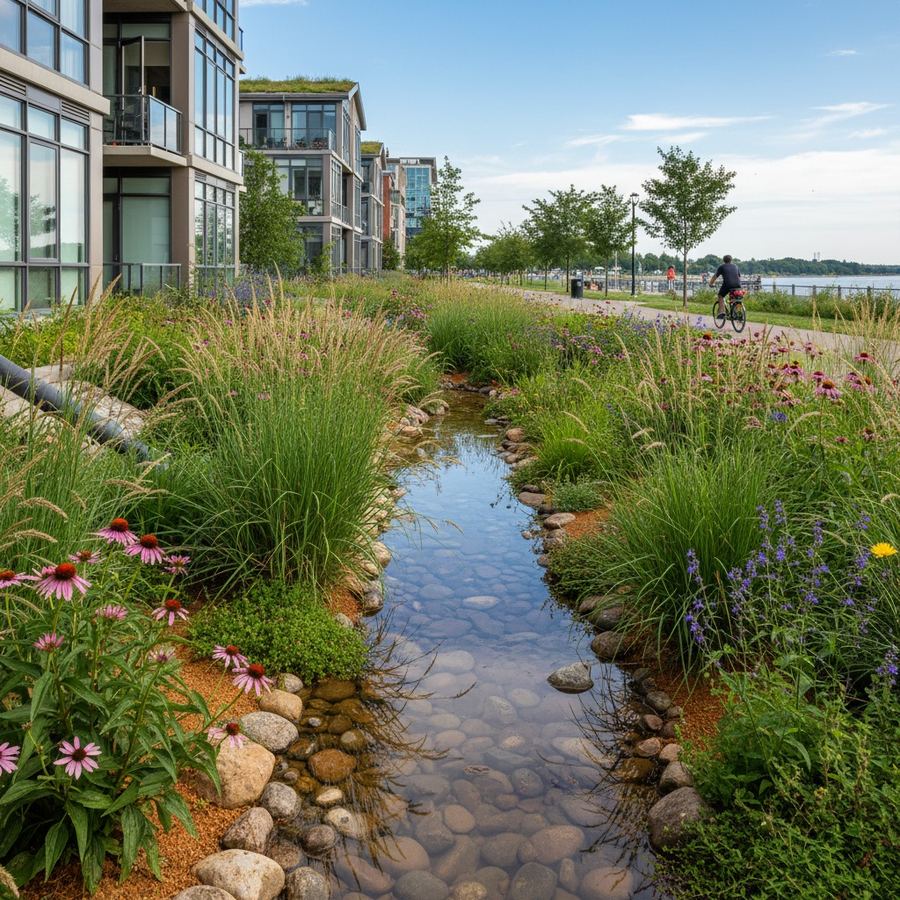
Philadelphia's Green City, Clean Waters program has installed thousands of rain gardens and other green stormwater features as a cost-effective alternative to building massive underground storage tunnels. The approach saves money and creates visible neighborhood improvements at the same time.
Bioswales
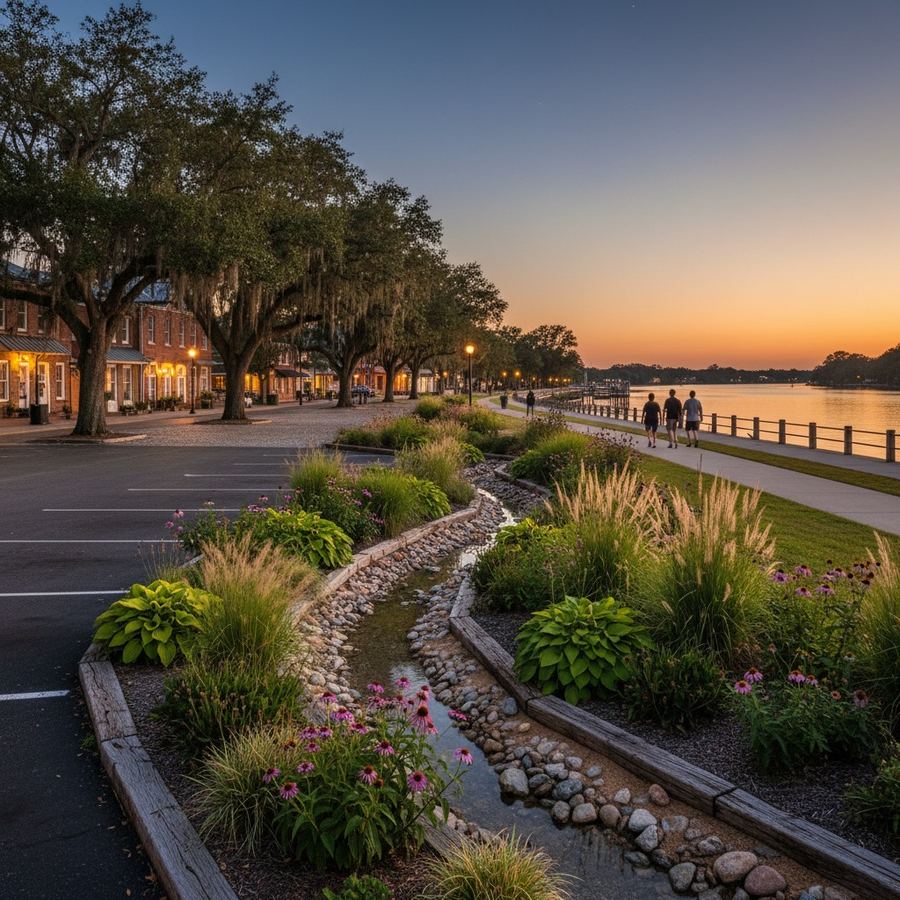
A bioswale is essentially a rain garden stretched into a linear shape, typically along a street, parking lot, or pathway. It functions the same way: collecting runoff, slowing it down, filtering it through soil and vegetation, and letting it infiltrate into the ground. Bioswales are particularly useful in parking lots and along roadways, where large paved surfaces generate significant runoff.
You have probably walked past bioswales without recognizing them. They often look like planted medians or vegetated ditches alongside roads. The difference between a bioswale and an ordinary ditch is engineering: the soil mix, the grading, and the plant selection are all designed to maximize water absorption and pollutant removal.
Permeable Surfaces
Conventional pavement is one of the biggest contributors to stormwater problems in cities. Rain hits asphalt or concrete and runs off immediately, picking up pollutants and overwhelming drainage systems. Permeable surfaces, including permeable pavers, porous asphalt, and porous concrete, allow water to pass through the surface and into a gravel layer beneath, where it infiltrates into the soil gradually.
Permeable pavement works well for parking lots, sidewalks, plazas, and low-traffic streets. It is not suitable for every application, and it requires periodic maintenance to keep the pores from clogging. But in the right locations, it can dramatically reduce runoff volumes. Combined with other green infrastructure elements, permeable surfaces help cities manage rainfall at the source rather than at the end of a pipe.
Tree Canopy
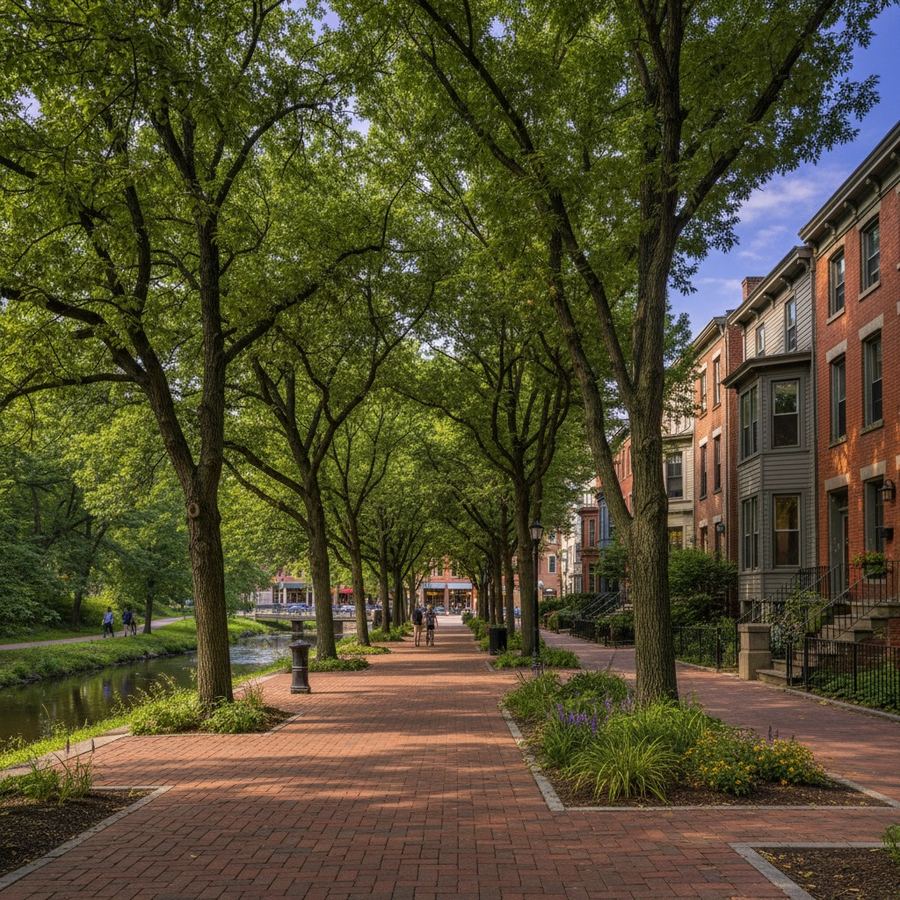
Trees are often discussed in aesthetic or cultural terms, but from a green infrastructure perspective, they are workhorses. A mature tree intercepts rainfall on its leaves and branches, reducing the volume of water that reaches the ground. Its root system absorbs water from the soil. Its canopy shades pavement, reducing the heat island effect and the energy needed to cool nearby buildings. Its leaves filter particulate matter from the air.
Portland's 33% canopy target reflects an understanding that trees are infrastructure. When a city loses mature tree canopy to development or disease, it loses stormwater capacity, air quality benefits, and cooling capacity that take decades to replace. The Sustainable SITES Initiative, a rating system for landscape design, awards significant credit for preserving existing trees and expanding canopy coverage, recognizing their cumulative infrastructure value.
How These Systems Work Together
The real power of green infrastructure emerges when individual elements work as a connected system rather than isolated installations. Consider a neighborhood street redesigned with green infrastructure in mind. Street trees shade the pavement and intercept rainfall. Bioswales along the curb collect and filter runoff from the road. Rain gardens in the planting strip absorb overflow from the bioswales. Permeable pavers on the sidewalk let water pass through to the soil beneath. A stream corridor at the end of the block receives whatever water the upstream features could not handle, already cleaner and slower than it would have been without them.
Each element handles a portion of the water. Together, they can manage the vast majority of rainfall events without any water reaching the traditional storm sewer. For cities with combined sewer systems, where stormwater and sewage share the same pipes, this reduction in runoff directly reduces the frequency of sewer overflows into rivers and lakes.
The Cost Question
One of the most common objections to green infrastructure is cost. Building rain gardens and bioswales costs money. Maintaining them requires ongoing attention. Permeable pavement costs more to install than conventional asphalt.
But the comparison is not green infrastructure versus no infrastructure. The comparison is green infrastructure versus the alternative: larger pipes, deeper tunnels, bigger treatment plants, and the environmental and health costs of untreated runoff. When analyzed on a lifecycle basis, green infrastructure frequently comes out ahead. The EPA has published guidance showing that green infrastructure approaches can reduce the cost of stormwater management while delivering co-benefits that pipes never will: shade, habitat, cleaner air, higher property values, and more attractive streets.
Milwaukee's green infrastructure program, for example, has invested in rain gardens, bioswales, and permeable surfaces across the city's combined sewer area. The program reduces sewer overflows, improves water quality in Lake Michigan, and creates visible neighborhood improvements, all at a fraction of the cost of the gray infrastructure alternative.
What Residents Can Look For
Understanding green infrastructure makes it easier to evaluate local development proposals, transportation projects, and park plans. When a city presents a streetscape redesign, look for bioswales, street trees, and permeable surfaces. When a developer proposes a new project, ask whether the stormwater plan relies entirely on underground detention or includes planted features that manage water at the surface. When your community plans a trail or greenway, consider whether the design integrates stormwater management or treats the trail as separate from the water system.
Green infrastructure is not complicated in concept. It uses natural processes to do work that we have traditionally asked pipes and concrete to do alone. The more residents understand how it works, the more likely their communities are to invest in it wisely and maintain it well.