When people hear the phrase "climate resilience," the images that come to mind tend to be large scale. Seawalls. Levees. Emergency operations centers with banks of screens. Federal disaster declarations. These things matter, but they represent only one end of the spectrum. Most of the resilience that actually shapes daily life in a city or town happens at a much smaller scale, on the streets and blocks where people live and work.
Climate resilience at street level is about the physical choices that determine whether a neighborhood can handle heat, heavy rain, drought, and the slow accumulation of environmental stress that comes with a changing climate. It is not abstract. It is the difference between a street that floods every time it rains hard and one that handles water gracefully. It is the difference between a block where summer afternoons feel dangerous and one where shade and airflow make the same temperature bearable.
The Street as a Climate System
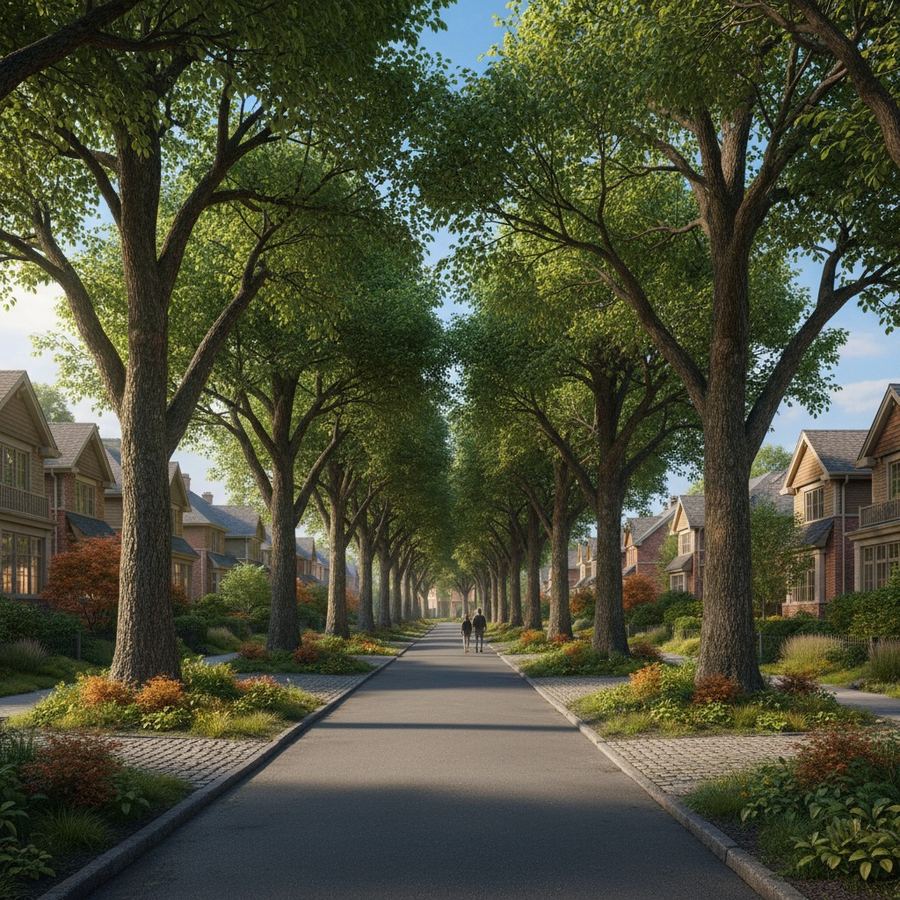
A typical residential street is an engineered surface designed primarily for vehicle movement and drainage. The pavement absorbs solar radiation and radiates heat back into the air. Stormwater runs off into a gutter, then a pipe, then a waterway. This is efficient in a narrow engineering sense, but it creates two problems that compound over time: the street gets hotter than it needs to be, and the water moves faster than it should.
A resilient street works differently. It still carries traffic. It still drains. But it does both while managing heat and water in ways that reduce stress on the surrounding neighborhood. Tree canopy provides shade that can lower surface temperatures by 20 to 45 degrees Fahrenheit on a summer afternoon. Lighter-colored surface materials reflect more solar energy instead of absorbing it. Bioswales and rain gardens along the curb capture stormwater and let it soak into the ground rather than rushing it downstream.
None of this is exotic. It is standard practice in communities that have decided to treat streets as more than just conduits for cars and pipes.
Heat, Block by Block
Urban heat is not distributed evenly across a city. It varies block by block, sometimes dramatically. A study of heat distribution in Richmond, Virginia found temperature differences of more than 16 degrees Fahrenheit between neighborhoods just a few miles apart. The hotter areas tended to have less tree canopy, more impervious surface, and fewer parks. The cooler areas had mature trees, permeable ground, and green space within walking distance.
This block-level variation means that resilience is not just a citywide policy question. It is a street-by-street design question. Two blocks in the same zip code can have completely different heat profiles depending on their tree cover, surface materials, and building orientation. The block with a row of mature oaks and a light-colored sidewalk is measurably cooler than the one with no trees and a dark asphalt parking lot next to the road.
The practical implication is that green infrastructure decisions at the block level have real, measurable effects on the people who live there. Planting street trees is not just an aesthetic choice. It is a public health intervention.
Water on the Ground
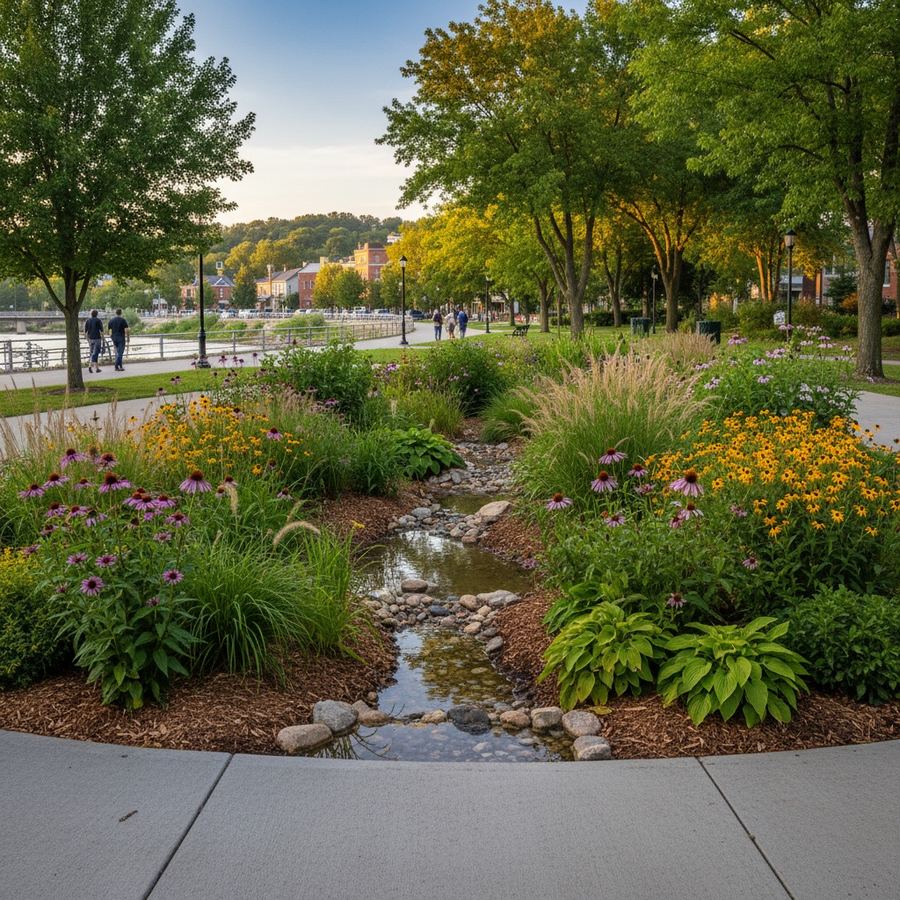
The other half of street-level resilience is water management. In most American cities, stormwater infrastructure was designed for rainfall patterns that no longer accurately describe what actually falls from the sky. Storms are more intense. Rainfall events dump more water in shorter periods. The pipes and culverts sized for mid-20th-century conditions are often undersized for what is happening now.
The EPA has documented this shift extensively. Heavier downpours have increased in frequency and intensity across most of the United States, with the Northeast and Midwest seeing the largest increases. When more rain hits more pavement and the pipes cannot keep up, the result is street flooding, basement backups, and combined sewer overflows that send untreated water into rivers and streams.
Street-level resilience addresses this by slowing water down before it reaches the pipe. Permeable pavement in parking lanes lets water filter through the surface into a gravel bed below. Curb cuts direct runoff into planted areas where soil and roots absorb it. Street trees intercept rainfall with their canopy, reducing the volume that hits the ground. According to the EPA, a single mature tree can intercept more than 1,000 gallons of stormwater per year.
These are not substitutes for functional pipe infrastructure. They are complements that reduce the load on the system and handle the margin that the old pipes were never designed for.
What Resilience Feels Like
Resilience is also something people experience physically. You can walk down a tree-lined block in July and feel the temperature drop as you move from sun to shade. You can watch a heavy rain hit a bioswale and see the water disappear into the ground instead of sheeting across the road. You can notice that a neighborhood with connected green spaces feels calmer and more comfortable than one where every surface is hard and every gap is paved.
This matters because resilience that people can see and feel generates public support for the investments that make it possible. A rain garden that visibly captures stormwater is a better argument for green infrastructure than any engineering report. A shaded street where people actually walk in summer is a better case for tree planting than any canopy coverage target.
Small Decisions, Accumulated
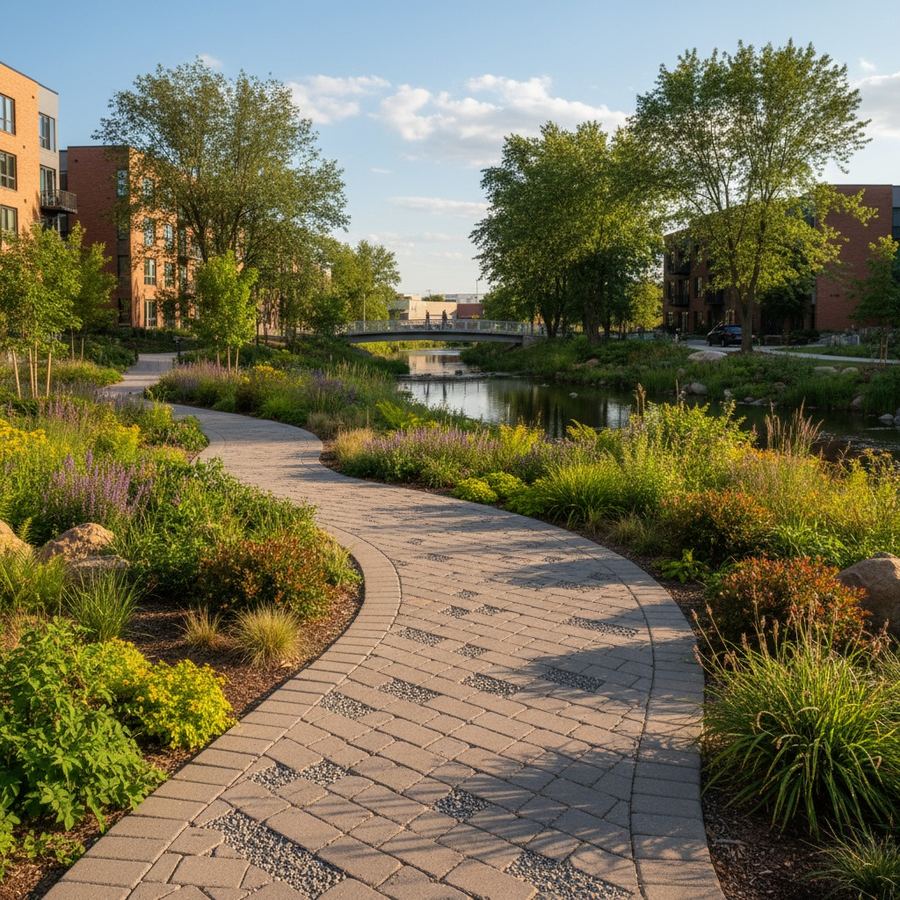
The reason street-level resilience matters so much is that cities are made of streets. There are more linear feet of street in most American cities than any other type of public infrastructure. The choices made about those streets, what they are surfaced with, whether they have trees, how they handle water, whether they prioritize human comfort or just vehicle throughput, accumulate into the overall resilience profile of the entire community.
A city that plants street trees consistently across every neighborhood, installs permeable surfaces in its parking lanes, and builds rain gardens into its curb extensions is not making one big resilience investment. It is making thousands of small ones that add up. Over a decade, those accumulated choices produce a city that handles heat better, manages stormwater more effectively, and provides a more comfortable environment for the people who live there.
This is the real work of climate resilience. Not the dramatic, headline-grabbing infrastructure projects, though those have their place. The real work is the slow, steady upgrading of ordinary streets to handle the conditions that are already arriving. It is choosing the right tree for the right spot. It is specifying permeable pavement instead of standard asphalt. It is designing a curb extension that captures runoff instead of just slowing traffic.
Where This Is Already Happening
Philadelphia's Green City, Clean Waters program is one of the most visible examples. The city committed to managing stormwater through green infrastructure, and the results show up block by block in rain gardens, tree trenches, and permeable parking lanes. Portland, Oregon has done similar work for decades, converting conventional street edges into stormwater-managing landscapes.
But it is not only large cities. Smaller communities like Lancaster, Pennsylvania and Hoboken, New Jersey have adopted green infrastructure strategies at the street level. Lancaster's program has become a model for how a smaller city can manage stormwater through distributed green infrastructure rather than centralized pipe upgrades.
The common thread is that resilience was treated as something built into the fabric of everyday places. The question was not just "How do we move water?" but "How do we make this street work better for the people who use it while also managing the stresses that are getting worse?" That framing is what makes street-level thinking different from the big-infrastructure approach. Both are necessary. But the street-level work is where most people will actually experience the results.