When people hear "urban nature," most picture a city park with mowed lawns and a few shade trees. That image is not wrong, but it captures only a small fraction of what nature in cities actually looks like. Urban nature includes tree canopy over sidewalks, rain gardens collecting runoff from parking lots, pollinator strips along rail corridors, green roofs absorbing heat and rainfall, riparian buffers along creeks, and the unmanaged edges where wildflowers and woody plants persist without anyone planting them.
Recognizing this broader picture matters because it changes how cities invest, how residents think about their surroundings, and how planners approach the challenge of making urban areas more livable and resilient.
Beyond the Manicured Park
Traditional parks are valuable, but they represent a particular kind of nature: managed, maintained, and designed primarily for human recreation. A softball diamond with turf grass and chain-link fencing is technically green space, but it contributes relatively little to ecological function. It does not filter stormwater, support pollinators, or cool the surrounding air the way a patch of native woodland does.
The most ecologically productive urban nature often looks less tidy than what we expect. A stream buffer thick with willows and sedges. A vacant lot colonized by goldenrod and milkweed that has become a stopover for monarch butterflies. A rain garden filled with rushes and native grasses that holds water after a storm and releases it slowly into the soil. These spaces may not look like much on a postcard, but they are doing measurable ecological work.
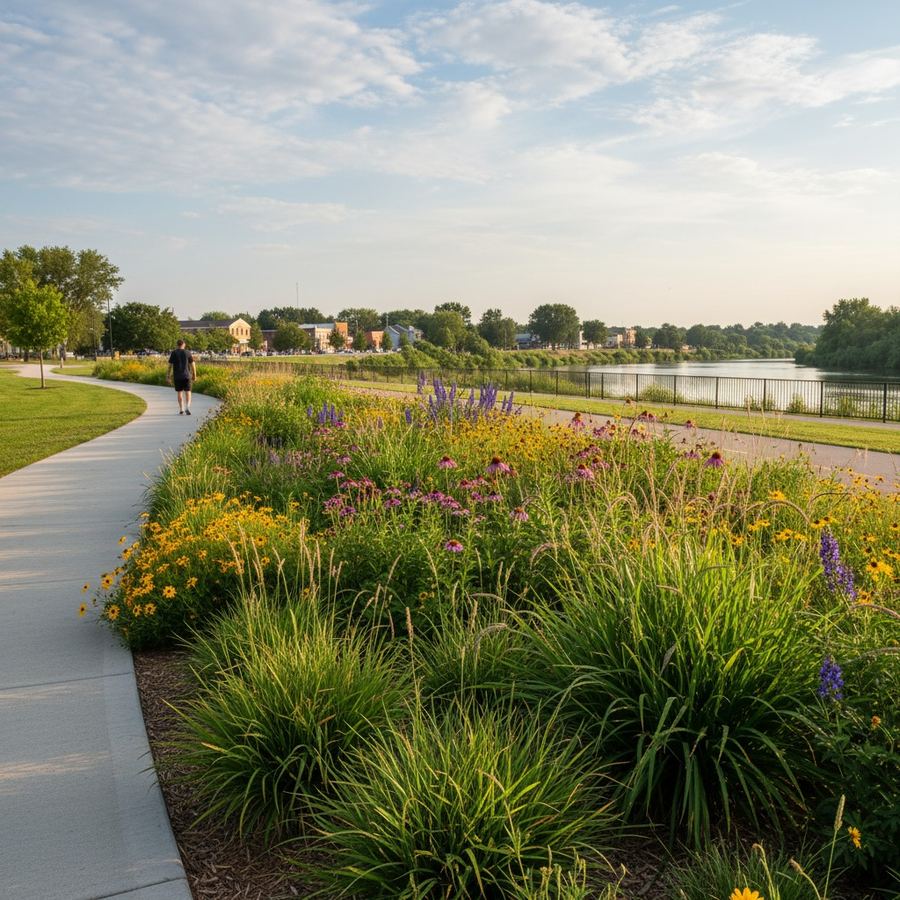
Cities that understand this distinction begin to see opportunities everywhere. A utility right-of-way becomes a pollinator corridor. A stormwater detention basin becomes a wetland. A highway median becomes a linear planting of native trees. The shift is from thinking about nature as something that occupies designated park parcels to understanding it as a layer that can be integrated across the entire urban landscape.
Tree Canopy as Infrastructure
Of all the forms urban nature takes, tree canopy may be the most consequential for daily life. Mature trees cool streets and buildings, reducing energy costs and mitigating the urban heat island effect. They filter air pollutants, absorb stormwater, provide habitat for birds and insects, and create the kind of comfortable, walkable streetscapes that support local economies.
Portland's goal of 33% citywide tree canopy coverage treats trees as a public asset on par with roads and water mains. This framing has real consequences for how budgets are allocated and how development is regulated. When a city recognizes that removing a 50-year-old street tree eliminates decades of accumulated ecological and economic value, it changes the calculus around what gets preserved and what gets cut.
The EPA has documented the role urban forests play in managing air quality, particularly in cities that struggle to meet federal standards for ozone and particulate matter. A single mature tree can intercept thousands of gallons of rainfall per year, reducing the load on stormwater systems. Multiply that by tens of thousands of street and yard trees and the aggregate effect becomes a significant piece of municipal infrastructure.
Green Roofs, Walls, and Vertical Nature
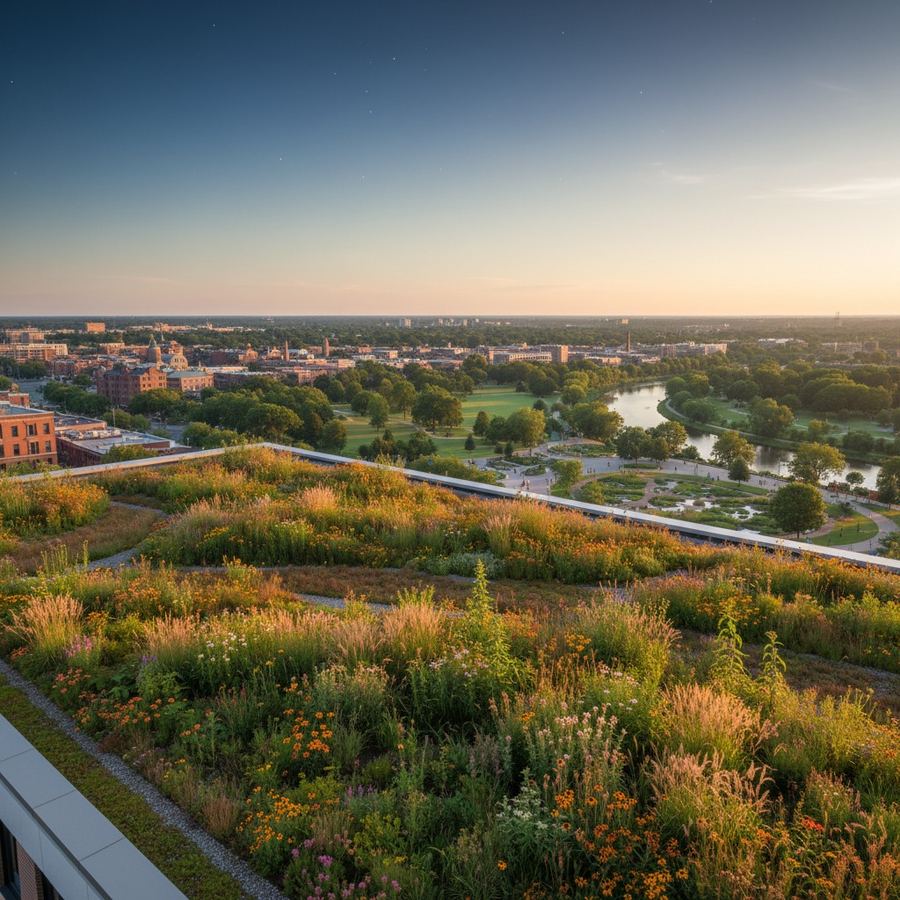
In dense urban cores where ground-level space is scarce, nature moves upward. Green roofs planted with sedums and native grasses absorb rainfall, reduce building energy use, and provide habitat for pollinators and birds. Green walls and facade plantings filter air and moderate building temperatures. These systems are common in European cities like Copenhagen and Stuttgart and are gaining traction in North American cities as building codes and incentive programs evolve.
The scale of green roofing in some cities is substantial. Toronto requires green roofs on new buildings above a certain size. Chicago has hundreds of green roofs, including a well-known installation on City Hall that has been studied for its stormwater and temperature reduction benefits. These are not token gestures. At scale, green infrastructure on buildings contributes meaningfully to managing rainfall and moderating the microclimate of dense districts.
Riparian Buffers and Stream Corridors
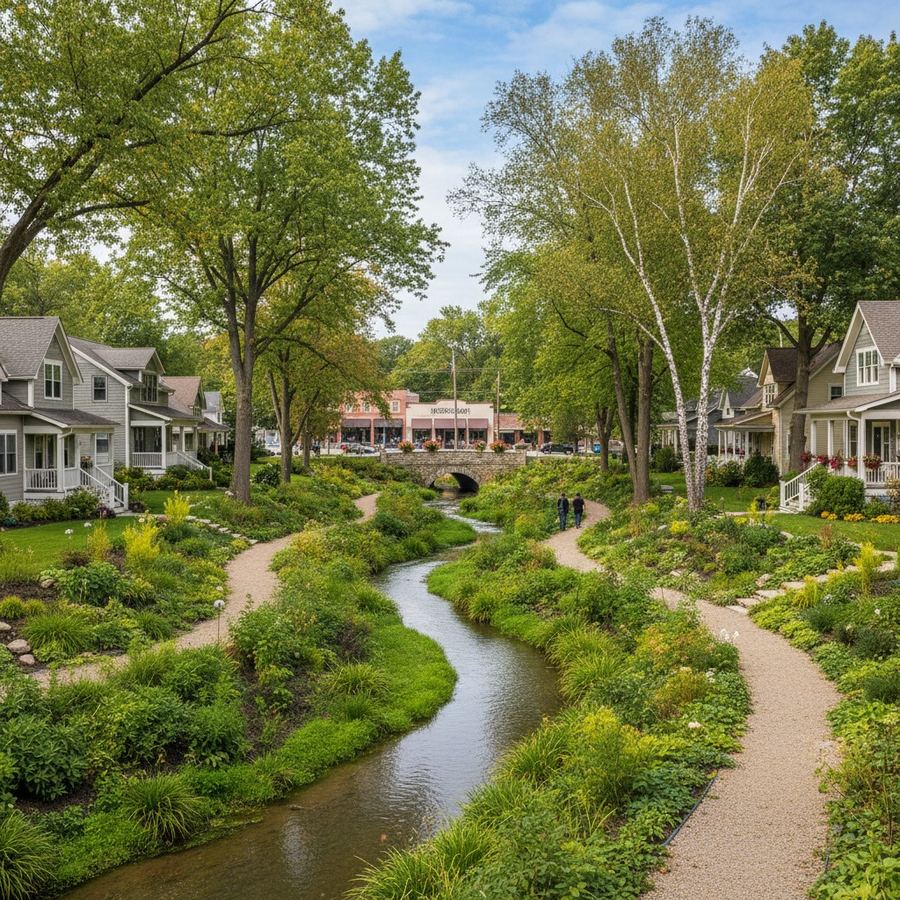
Many cities grew up along rivers and creeks, then spent the better part of a century burying, channelizing, or ignoring those waterways. The restoration of urban stream corridors has become one of the most productive areas of urban nature investment. A healthy riparian buffer, the zone of vegetation along a stream bank, filters pollutants, stabilizes soil, moderates flooding, and provides linear habitat that connects larger natural areas.
River corridors that have been restored or protected often become the spines of trail networks and greenway systems, combining ecological function with recreation and transportation. The value is compounding: a single corridor can manage stormwater, support wildlife, provide a walking route, and anchor adjacent property values all at once.
The Unmanaged Edges
Perhaps the most overlooked category of urban nature is what ecologists sometimes call "novel ecosystems" or "spontaneous vegetation." These are the places where nature establishes itself without being planted or maintained: abandoned rail corridors, vacant lots, fence lines, unmowed margins along highways, and the edges of industrial sites. These spaces often support surprising levels of biodiversity, including native plants, pollinators, and small mammals that find footholds in the gaps between managed landscapes.
Not every weedy lot is an ecological treasure, but collectively these unmanaged edges form a significant portion of urban green cover in many cities. The question for planners is not whether to formalize every wild edge, but how to recognize their value and avoid eliminating them reflexively. A small natural area that has persisted for decades on a neglected parcel may have more ecological value than a newly installed ornamental garden.
Seeing the Full Picture
Understanding what urban nature actually means requires looking past the park boundary. It means seeing the street tree, the rain garden, the green roof, the stream buffer, and the weedy lot as parts of a connected system. Each element contributes something. Together, they form the ecological and experiential fabric that makes a city more livable.
Cities that grasp this broader definition tend to make better decisions about land use, development review, and capital investment. They protect mature trees during construction. They require stormwater management that uses plants and soil rather than just pipes. They look at biodiversity as a measure of urban health, not just a concern for wilderness areas. And they build public support for nature investments by helping residents see the full range of what nature in their city actually does.