When most people think about trails, they picture weekend recreation: a Saturday morning jog, a family bike ride, a walk with the dog. Trails serve those purposes well. But trail networks, when thoughtfully designed and connected, do far more than provide places to exercise. They function as transportation infrastructure, wildlife corridors, green space connectors, and economic catalysts. The gap between how trails are perceived and what they actually deliver may be one of the widest in urban planning.
Trails as Transportation
A trail that connects a residential neighborhood to a school, a workplace, or a commercial district is not just a recreational amenity. It is a transportation route. For people who bike or walk to work, a well-designed trail separated from car traffic is safer, more comfortable, and often faster than navigating a road network designed around automobiles.
Chicago's 606 Trail, built on an elevated former rail line, demonstrates this clearly. It connects several neighborhoods on the city's northwest side, providing a direct, car-free route for commuters and a safe path for families with children. Property values along the corridor rose significantly after the trail opened, reflecting the market's recognition that trail access has real economic value. The 606 also sparked broader conversations about equitable access, gentrification, and who benefits from trail investments, conversations that matter for any community considering similar projects.
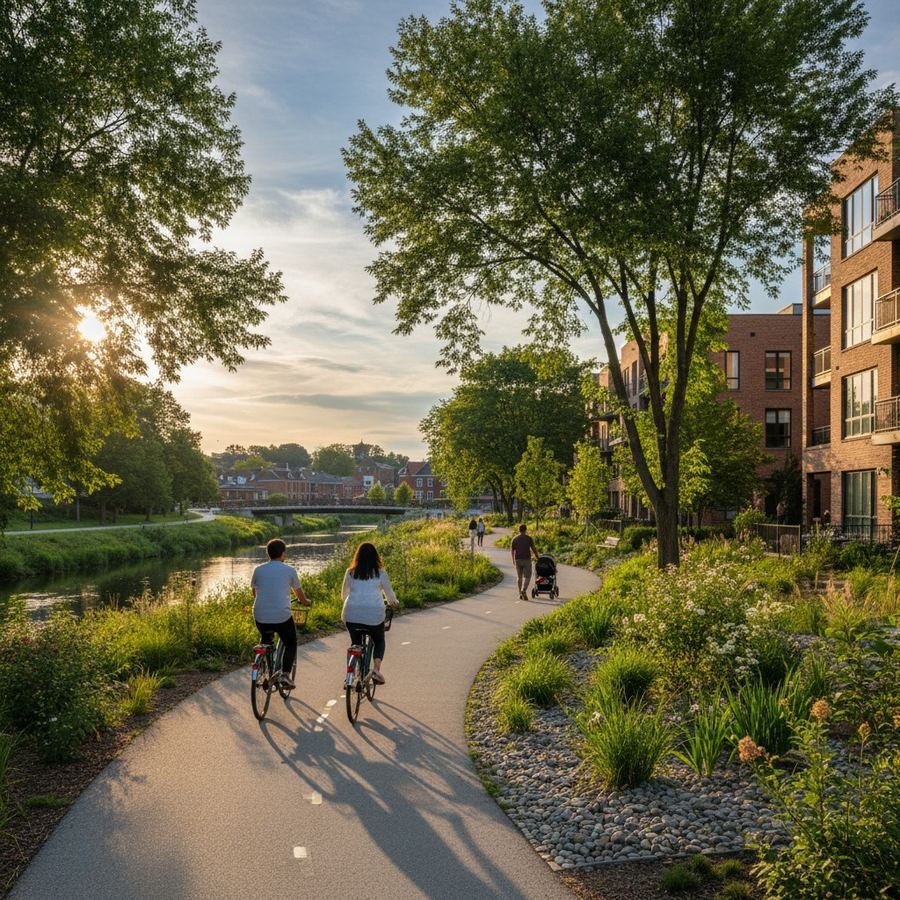
The transportation value of trails scales with connectivity. A single trail segment that dead-ends at a park is useful for recreation but limited as infrastructure. A network of trails that connects neighborhoods, schools, transit stops, and commercial areas becomes a viable alternative to driving for a meaningful share of daily trips. This is the model Singapore has pursued with its park connector network, which links parks, nature reserves, and town centers through more than 300 kilometers of greenways designed for both recreation and commuting.
Connecting Neighborhoods and Reducing Isolation
Trails cross boundaries that roads often reinforce. A highway or arterial road can divide neighborhoods as effectively as a wall. A trail that passes under a highway overpass or follows a stream corridor through an industrial area can reconnect communities that have been physically separated for decades.
This connectivity has social value that is difficult to quantify but easy to observe. Trails become places where people from different neighborhoods encounter each other. They become routes that children use to reach friends' houses and parks. They become corridors that make it possible for elderly residents to walk to a store or a community center without navigating high-speed roads. For communities that lack well-planned public spaces, a trail network can become the de facto commons, the shared space where civic life happens informally.
Wildlife Corridors and Ecological Function
Trail corridors, particularly those that follow streams, rivers, or rail lines, often serve double duty as wildlife corridors. The vegetated margins alongside a trail provide habitat and movement routes for birds, pollinators, small mammals, and amphibians. A trail network that connects parks, stream buffers, and natural areas creates the kind of habitat connectivity that urban biodiversity depends on.
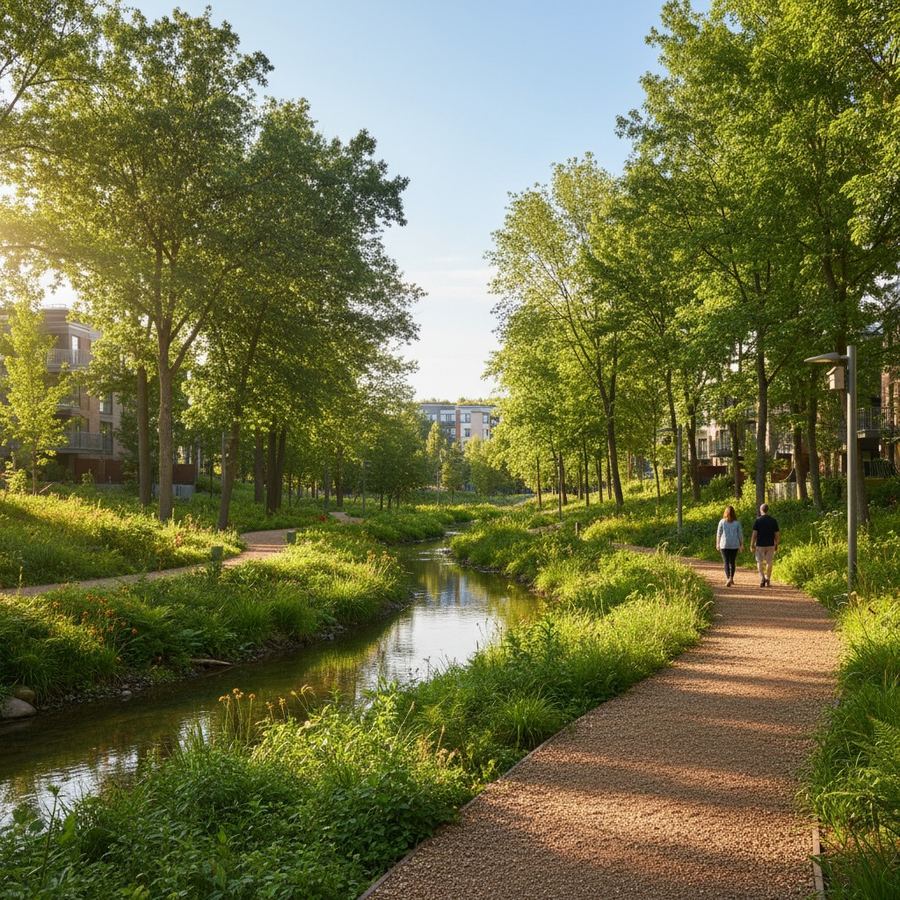
The design matters. A paved trail with mowed grass on both sides offers less ecological value than one flanked by native plantings, shrubs, and trees. The best trail designs balance human use with habitat function, providing a comfortable surface for walking and cycling while maintaining vegetated buffers wide enough to support wildlife. Green corridors that serve both people and wildlife are among the most efficient investments a city can make.
Health and Access to Nature
The Trust for Public Land's 10-minute walk framework focuses on parks, but trails are often the connective tissue that makes park access possible. A park three blocks away is only useful if there is a safe, comfortable route to reach it. In neighborhoods where sidewalks are incomplete, streets lack crosswalks, or traffic speeds make walking feel dangerous, a trail that bypasses the road network can be the difference between accessible nature and nature that exists on a map but not in daily life.
The health benefits of trail access extend beyond exercise. Research consistently shows that spending time in green environments reduces stress, improves mood, and supports cognitive function. A trail through a wooded corridor or along a stream provides a qualitatively different experience than walking on a sidewalk next to traffic. The nature-proximity research is clear: the closer people live to quality green space, the more likely they are to use it, and the greater the health benefits they experience.
Economic Impact
Trail investments generate measurable economic returns. Property values near trails typically increase, often by 5% to 15% for homes within a quarter mile. Trail corridors attract spending on food, gear, and services in adjacent commercial areas. Communities along popular trail systems see tourism revenue that would not otherwise exist.
The economic case becomes especially strong for smaller cities and towns that may not have the budget for large park developments. A trail network built incrementally, connecting existing green spaces, following stream corridors, and using abandoned rail lines, can create a high-impact public amenity at a fraction of the cost of a traditional park. The practical considerations for evaluating a trail system are straightforward, and the return on investment is well documented.
What Makes a Trail Network Work
Not all trail investments deliver equal value. The factors that separate a useful trail network from a collection of disconnected paths include connectivity (does the trail go where people need to go?), safety (is it separated from car traffic, well-lit where appropriate, and visible from surrounding areas?), surface quality (is it accessible to a range of users?), and maintenance (is it kept in condition year-round?).
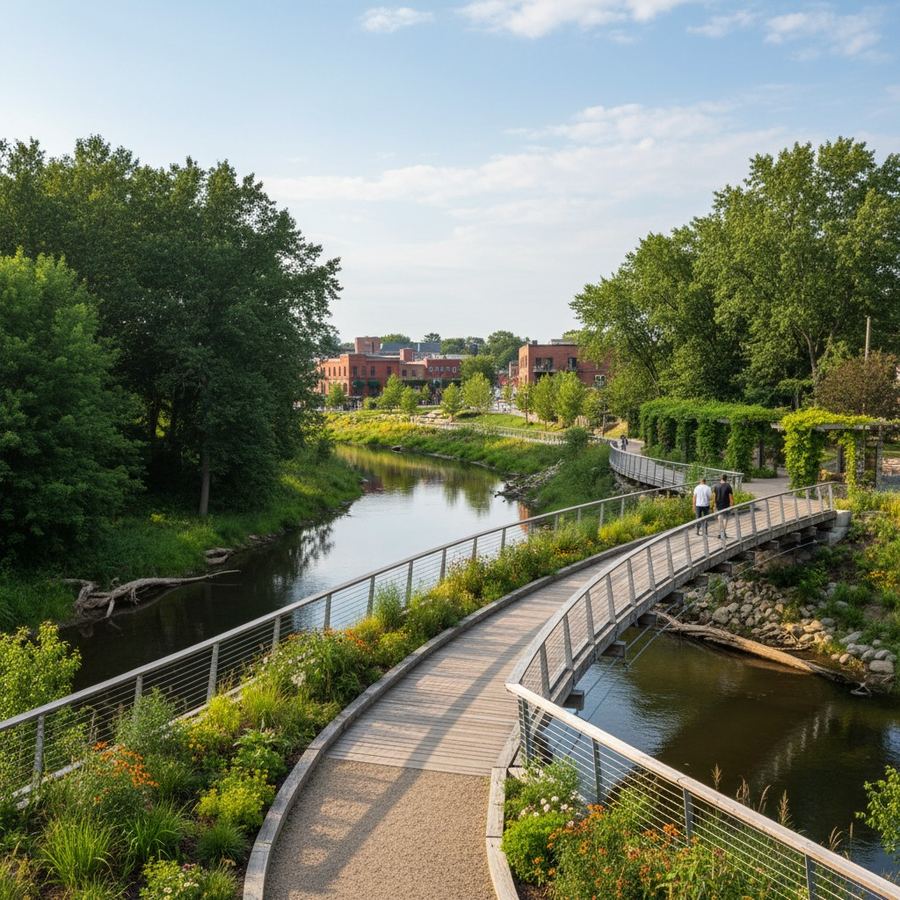
The most successful trail networks are those planned as systems from the start, even if built in phases. A master plan that identifies key connections, prioritizes segments that serve the most residents, and coordinates with transportation and land-use planning produces far better results than ad hoc trail construction driven by whatever grant happens to be available.
Trails deserve a place in serious planning conversations alongside roads, transit, and utilities. They are not amenities in the soft, optional sense. They are infrastructure that moves people, connects communities, supports ecosystems, and generates economic value. The communities that recognize this and invest accordingly will be measurably better places to live.