On a clear night in most American cities, you can see a few dozen stars. Step outside the same city and drive thirty minutes into the countryside and the number jumps to several thousand. The difference is light pollution: the cumulative glow of streetlights, parking lot fixtures, building facades, signs, and security lights that scatter into the atmosphere and wash out the night sky. It is so pervasive that most urban residents have never seen the Milky Way from their own neighborhood.
Light pollution is easy to overlook because it happens gradually and because, unlike air or water pollution, it does not seem immediately harmful. But the evidence is now clear that excessive artificial light at night affects human health, disrupts wildlife, wastes energy, and degrades the quality of life in ways that communities are only beginning to address.
The Human Health Dimension
Human biology runs on circadian rhythms, internal clocks calibrated by the cycle of light and darkness. When artificial light disrupts that cycle, the consequences are measurable. Exposure to bright, blue-spectrum light at night suppresses melatonin production, a hormone essential for sleep regulation. Poor sleep, in turn, is linked to increased risk of obesity, diabetes, cardiovascular disease, and depression.
The research on this front has accelerated. Studies have found associations between nighttime light exposure and elevated rates of breast and prostate cancer, a connection thought to be mediated through melatonin suppression and circadian disruption. The American Medical Association issued guidance in 2016 recommending that communities minimize blue-rich white LED lighting, precisely because of the health implications.
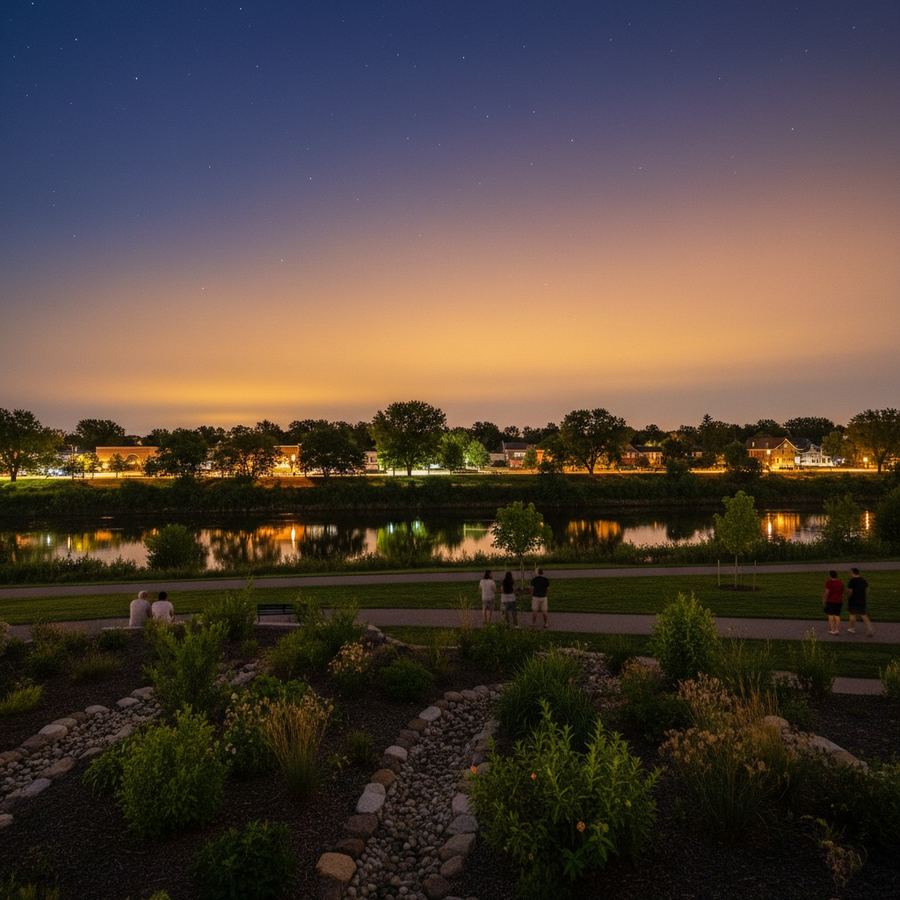
This does not mean cities should be dark. It means that the type, intensity, direction, and spectrum of outdoor lighting all matter for public health. A well-designed lighting system illuminates streets and sidewalks for safety without flooding the sky and bedroom windows with scattered light.
Effects on Wildlife
The ecological disruption caused by artificial light at night is extensive and well documented. Migratory birds, which navigate in part by starlight, become disoriented by brightly lit buildings and communication towers, leading to millions of collision deaths each year across North America. The International Dark-Sky Association, now known as DarkSky International, has catalogued these effects and advocated for building lighting practices that reduce bird strikes during migration seasons.
Insects are drawn to lights and die from exhaustion, heat, or predation in enormous numbers. Since insects form the base of food webs that support birds, bats, fish, and amphibians, the decline of insect populations near heavily lit areas cascades through the ecosystem. Firefly populations, which depend on darkness for mating communication, have declined sharply in areas with high ambient light.
Sea turtles, frogs, bats, and many other species are affected by artificial light in ways that alter feeding, reproduction, and migration. For communities concerned about urban biodiversity, addressing light pollution is not a peripheral issue. It is a direct intervention in one of the most pervasive environmental pressures on urban wildlife.
Energy Waste
Light that shines upward into the sky is, by definition, wasted. It illuminates nothing useful. It serves no safety purpose. It simply consumes electricity and produces atmospheric glow. Estimates vary, but research suggests that roughly 30% to 50% of outdoor lighting in the United States is wasted through poor fixture design, excessive brightness, or lighting that operates when and where it is not needed.
The shift to LED lighting has been a mixed story. LEDs are dramatically more energy-efficient than the sodium vapor and metal halide fixtures they replaced. But many communities used the LED transition as an opportunity to increase brightness, sometimes dramatically, offsetting the efficiency gains and worsening the quality of the nighttime environment. The lesson is that efficiency without good design does not solve the problem.
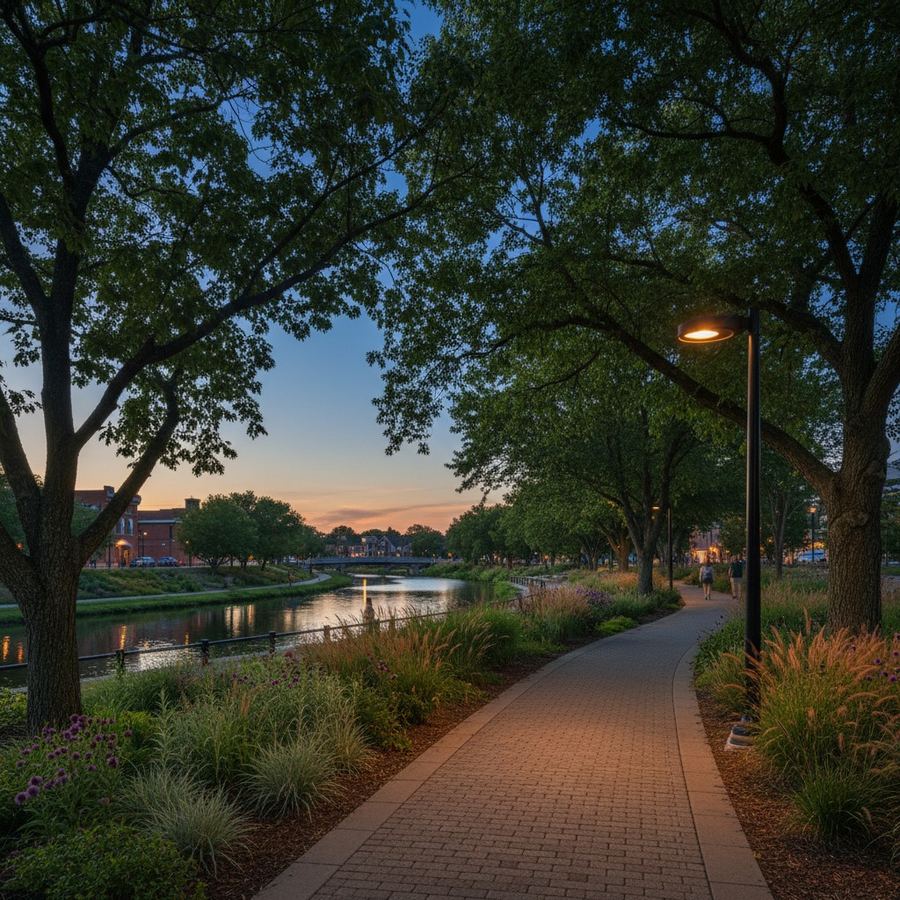
What Good Lighting Looks Like
The solution to light pollution is not darkness. It is better lighting design. The principles are straightforward and well established:
Shielding. Light fixtures should direct light downward, where it is needed, rather than allowing it to scatter sideways and upward. Fully shielded fixtures, sometimes called full-cutoff fixtures, eliminate upward light waste almost entirely.
Appropriate brightness. More light is not always better. Over-lit environments create harsh glare that actually reduces visibility by causing the eye's pupil to constrict. A uniformly lit area at moderate brightness is safer and more comfortable than a patchwork of intense lights and deep shadows.
Warm spectrum. Light with a lower color temperature (warmer, more amber tones) scatters less in the atmosphere and is less disruptive to circadian rhythms and wildlife than the cool, blue-white light produced by many LED fixtures. A simple shift from 5000K to 3000K or lower makes a measurable difference.
Controls. Lighting that dims or turns off when no one is present, using timers, motion sensors, or adaptive controls, reduces energy consumption and light pollution during the hours when most people are asleep and most wildlife is active.
Communities Pushing Back
A growing number of communities have adopted dark-sky ordinances or updated their lighting codes to reflect these principles. Flagstaff, Arizona, one of the first International Dark Sky Communities, has maintained strict lighting standards for decades while remaining a vibrant, well-lit city. Tucson, which overhauled its outdoor lighting code to protect both the night sky and the nearby observatories, has shown that large cities can manage lighting responsibly without compromising safety or livability.
The movement toward darker nights is not about going backward. It is about applying the same thoughtful design standards to lighting that we apply to other public infrastructure. A community would not accept a water system that wasted half its supply or a road network that pointed half its lanes in the wrong direction. Light deserves the same standard of intentional design.
Where This Connects
Light pollution intersects with many of the other themes that shape livable cities. It connects to urban nature through its effects on wildlife and ecosystems. It connects to streetscape design through the quality of the pedestrian environment at night. It connects to energy policy and climate through wasted electricity. And it connects to public health through the mechanisms of sleep disruption and circadian interference.
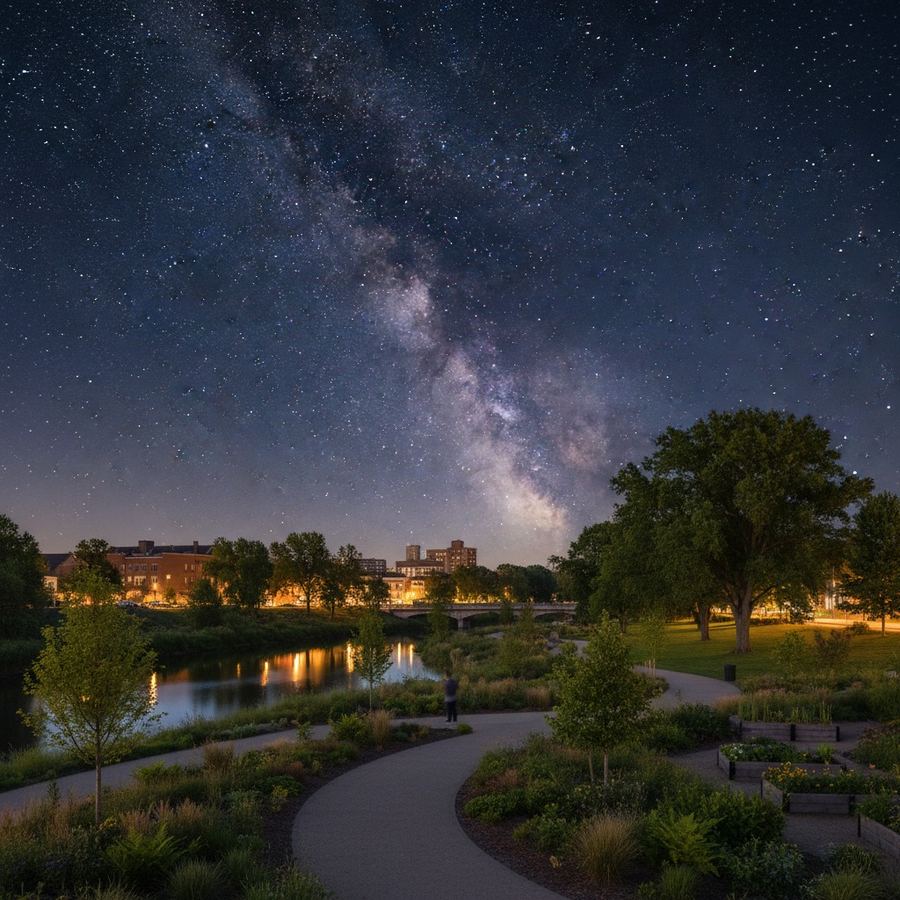
Addressing light pollution does not require large capital expenditures. It requires better specifications when fixtures are purchased, better codes when developments are reviewed, and better awareness among residents and businesses about the effects of the light they produce. The tools are available. The evidence is strong. And the night sky, that shared civic resource visible to everyone who steps outside after dark, is worth reclaiming.