Conversations about urban biodiversity tend to focus on large metropolitan areas. Research papers study bird populations in London parks. Conservation programs track peregrine falcons nesting on skyscrapers in New York. Media features cover coyotes navigating the streets of Los Angeles. These stories are compelling, but they can create the impression that urban biodiversity is primarily a big-city phenomenon, relevant to places with millions of people and major research institutions but not to the smaller cities and towns where most Americans actually live.
That framing misses the point. Biodiversity in smaller cities and towns matters enormously, both for the ecological functions it supports locally and for the role these communities play in the broader networks that connect urban and rural landscapes. A town of 25,000 people with intact stream corridors, native plantings, and connected green spaces may contribute more to regional biodiversity than a large city with extensive parks but limited habitat connectivity.
Why Biodiversity Matters in Any City
Biodiversity is not an abstract environmental metric. It is the foundation of ecological services that directly affect quality of life. Pollinators, including native bees, butterflies, and other insects, depend on diverse plant communities. Without them, local food production declines and the flowering plants that make gardens and parks attractive disappear. Pest control relies on predator-prey relationships: birds, bats, and beneficial insects keep mosquitoes, aphids, and other nuisance species in check. Remove the predators and the pests proliferate.
Water quality depends on the biological communities in streams, wetlands, and riparian zones. Aquatic insects, microorganisms, and riparian vegetation filter pollutants and stabilize stream banks. Soil health, which affects everything from garden productivity to stormwater infiltration, depends on a diverse community of organisms below ground, from earthworms to mycorrhizal fungi.
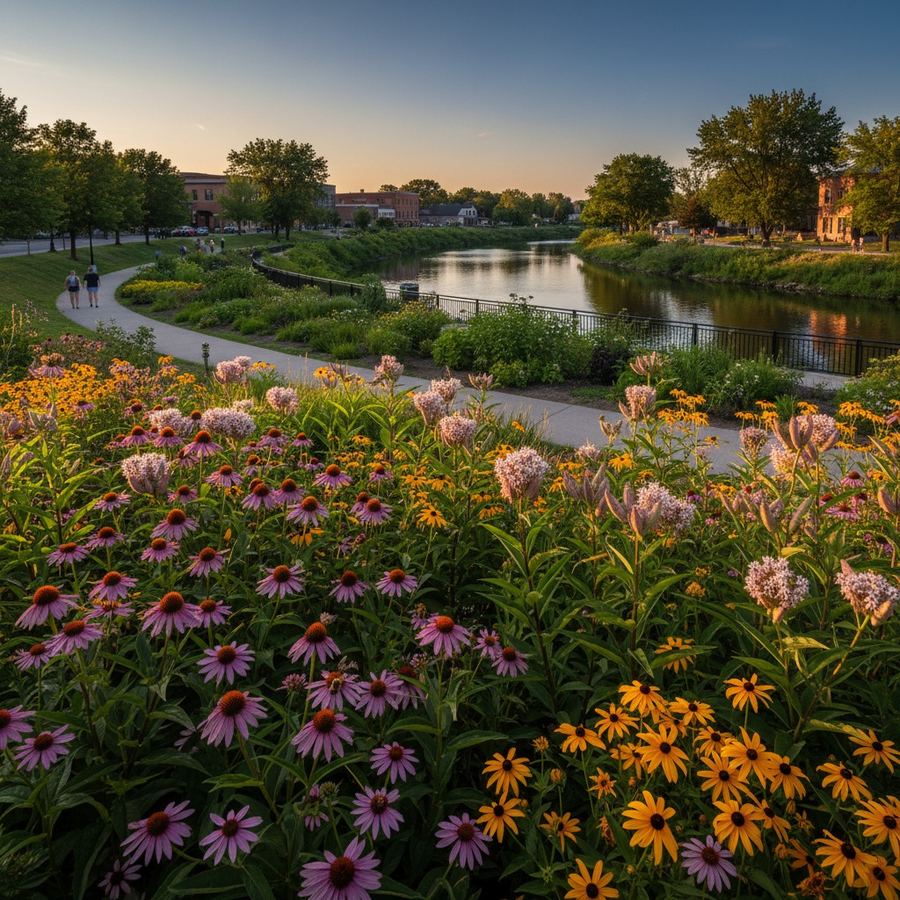
These functions operate in every city, regardless of size. A town that loses its native bee populations will see reduced yields in community gardens and surrounding farms. A city that channelizes its streams and removes riparian vegetation will see degraded water quality. The effects are local, tangible, and economically significant.
The Network Between Rural and Urban
Smaller cities and towns often sit at the interface between developed areas and the agricultural or forested landscapes that surround them. This position makes them critically important for ecological connectivity. Wildlife does not recognize municipal boundaries. Birds, pollinators, amphibians, and mammals move through landscapes, and the corridors they use frequently pass through or near developed areas.
A town with intact river corridors, vegetated buffers, and connected green spaces provides passage for wildlife moving between larger natural areas. A town that has paved, mowed, or developed those corridors creates a barrier, fragmenting habitats and reducing the viability of populations on either side.
The 30x30 initiative, which aims to conserve 30% of U.S. lands and waters by 2030, has focused significant attention on large landscapes and federal lands. But achieving that goal will also require conservation action in and around the places where people live. The green corridors that pass through smaller cities are part of the conservation picture, whether or not anyone has mapped them as such.
What Supports Urban Biodiversity
The factors that support biodiversity in smaller cities are the same ones that make these places more livable in general. Native plantings, in parks, along streets, and in residential yards, provide food and habitat for pollinators and birds that ornamental plantings from other continents often do not. Mature tree canopy supports insect communities that in turn feed birds and bats. Stream corridors with intact riparian vegetation support aquatic biodiversity and provide linear habitat connecting green spaces.
Understanding what counts as urban nature is essential here. Biodiversity does not require wilderness. It requires habitat: places where organisms can find food, water, shelter, and space to reproduce. A residential neighborhood with native trees, a few rain gardens, a vegetated stream buffer, and reduced pesticide use can support surprisingly high levels of biodiversity. A neighborhood with monoculture lawns, ornamental trees from Asia, and regular insecticide applications supports very little.
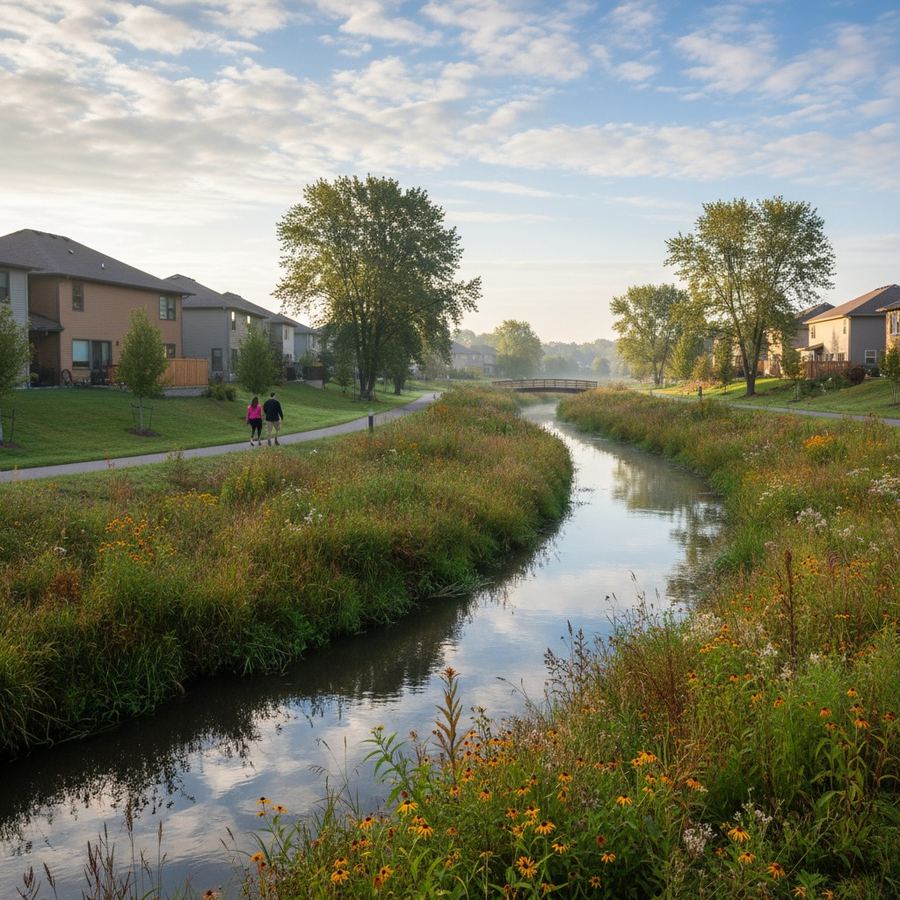
The choices that shape urban biodiversity are often made at the individual property level, but they add up across a community. Municipal codes that require native plantings in new developments, tree preservation ordinances that protect mature canopy, and stormwater regulations that encourage green infrastructure all contribute. So do educational efforts that help residents understand why a yard with native plants supports more life than a perfectly maintained lawn of non-native turf grass.
Practical Steps for Smaller Communities
A smaller city or town interested in supporting biodiversity does not need to create a formal biodiversity action plan, though some communities have done so effectively. It needs to integrate biodiversity considerations into decisions it is already making about land use, parks, stormwater, and development review.
When planning a new park, specify native plants adapted to local soil and moisture conditions. When reviewing a development proposal, evaluate its impact on stream corridors and mature tree canopy. When updating the stormwater ordinance, require vegetated features that provide habitat alongside water management. When maintaining roadsides and utility corridors, consider reduced mowing regimes that allow native grasses and wildflowers to establish.
The IUCN has noted that urban areas, including smaller cities, can play meaningful roles in global biodiversity conservation when they maintain habitat connectivity and native plant communities. This is not about turning towns into nature preserves. It is about recognizing that the land-use decisions communities make every day either support or undermine the biological systems that provide real, measurable services.
The Bigger Picture
Biodiversity loss is one of the defining environmental challenges of this century, alongside climate change and water scarcity. The instinct is to think of this as a problem for rainforests and coral reefs, and those ecosystems are indeed critical. But the fabric of biodiversity extends into every landscape, including the ones where people mow lawns, pave roads, and build houses.
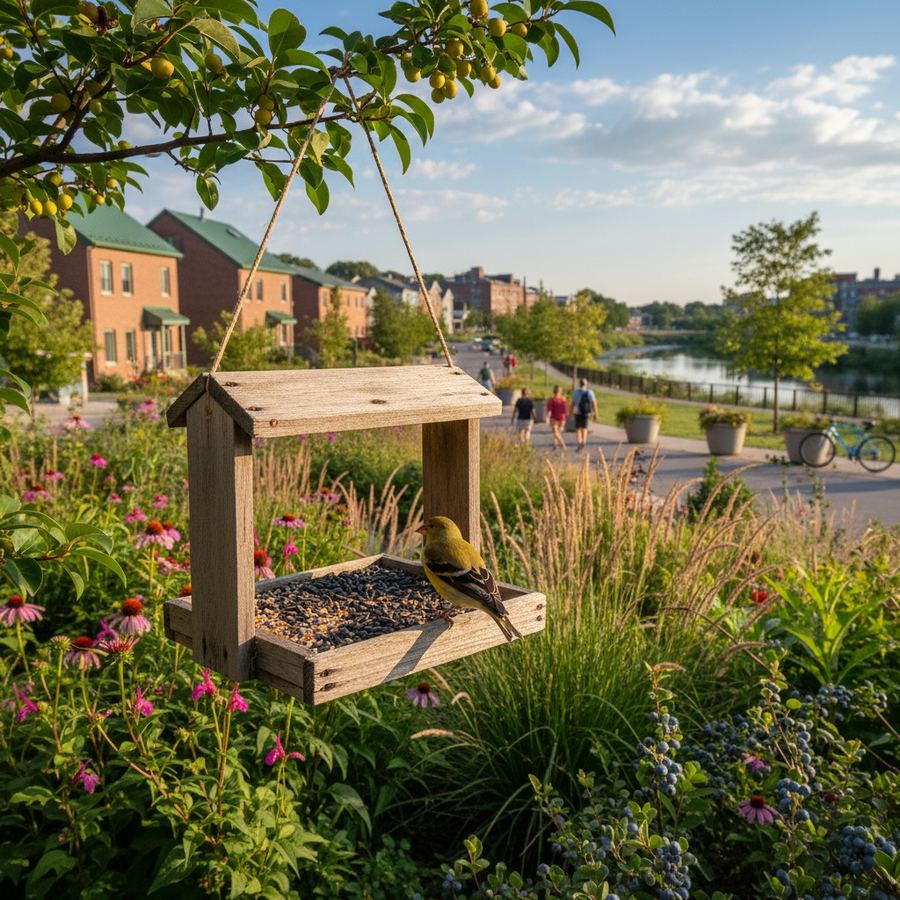
Smaller cities and towns are not bystanders in this challenge. They are participants. The stream corridors, woodlots, native plantings, and connected green spaces within and around these communities form part of the ecological network that sustains nature close to home. Investing in that network is not a luxury or a distraction from more pressing concerns. It is a practical strategy for maintaining the ecological functions that communities depend on, from pollination to water quality to pest control, in a landscape that is changing rapidly.