There is a simple test for whether a street works: Do people spend time on it by choice? Not because they have to get from one place to another, but because they want to be there. A street where people linger, sit, stop to talk, or simply walk at a comfortable pace is doing something right. A street that people cross quickly, avoid when possible, or endure rather than enjoy is failing at one of its most basic functions.
The difference usually comes down to physical comfort. Not aesthetics, though that matters. Not programming, though events can help. The foundation is whether the street provides the basic conditions that make a human body feel reasonably good: shade from the sun, protection from wind, a surface that is easy to walk on, a place to sit, and enough separation from fast-moving vehicles to feel safe. These are not luxuries. They are the minimum conditions for a street that works as a public space rather than merely a transportation corridor.
Shade Is Not Optional
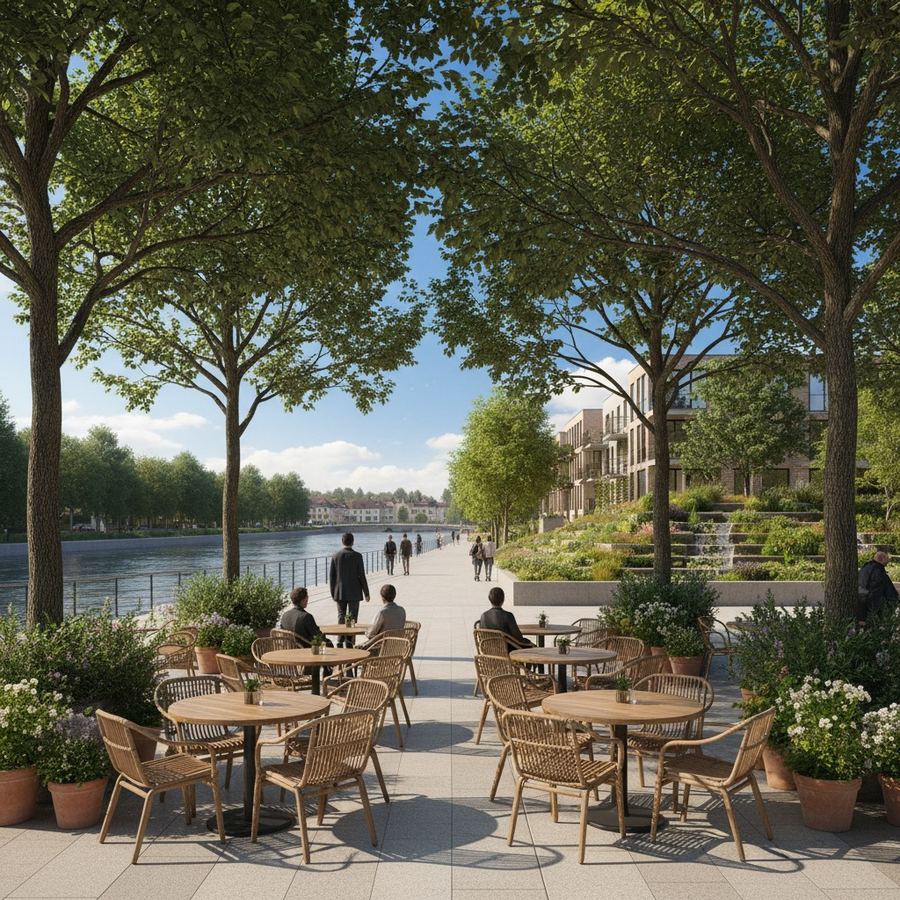
In any climate that experiences warm summers, shade is the single most important comfort factor on a street. An unshaded sidewalk in direct sun on an 85-degree day produces a radiant heat load that makes the perceived temperature 10 to 20 degrees higher. People instinctively avoid these conditions. They walk on the shaded side of the street, they cross to the other sidewalk, they stay indoors. A commercial street without shade is a commercial street that loses foot traffic every summer afternoon.
Shade comes from three sources: trees, buildings, and structures. Of these, trees are the most effective because they also cool the air through evapotranspiration, not just blocking sunlight but actively reducing the temperature around them. A mature street tree with a broad canopy can shade 1,500 to 3,000 square feet of ground. A row of them, properly spaced, creates a continuous shaded corridor that transforms the experience of walking.
Building shade matters too, especially on east-west streets where one side is in shadow during morning or afternoon hours. Awnings, arcades, and building overhangs provide shade close to the building face. But for the broad sidewalk and the crossing, trees and structures are what matter.
Shade structures like pergolas, canopies, and transit shelters fill the gap where trees cannot grow or have not yet matured. A bus stop with a solid roof provides not just shade but rain protection. These elements cost money, but they pay back in use. A shaded seating area gets used. An exposed one does not.
Seating That Actually Gets Used
The absence of places to sit is one of the most common failures of American streetscapes. Many commercial streets have no public seating at all, or they have token benches placed at intervals that suggest their primary purpose is to satisfy a checklist rather than to serve people. The result is a street where the only way to rest is to buy something and sit inside a business.
Good seating needs to be in the right location: shaded, near activity, with something to look at. The urbanist William H. Whyte documented this in his studies of New York public spaces. His findings still hold. People sit where there is something to watch, where they can see and be seen, and where the microclimate is comfortable.
Variety matters. Ledges, steps, planter edges, and low walls all function as informal seating if they are the right height (roughly 16 to 20 inches) and depth (at least 12 inches). Streets that integrate these "secondary seating" opportunities provide far more capacity than those relying on benches alone.
The concern that seating will attract loitering is common but largely unfounded. Streets with ample, comfortable seating attract more users overall, which creates a self-policing environment. Removing seating to discourage a few people from lingering succeeds mainly in discouraging everyone.
Width, Surface, and the Walking Experience
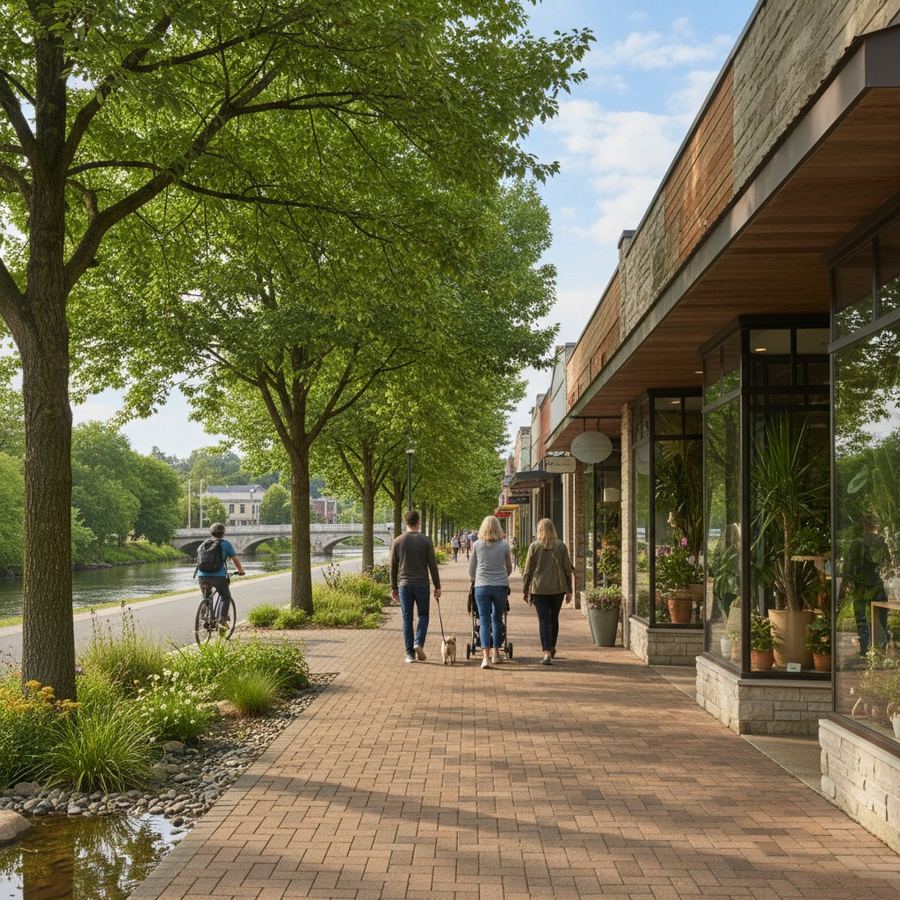
A sidewalk's width determines what can happen on it. A four-foot sidewalk accommodates single-file walking and nothing else. Two people cannot walk side by side comfortably. A wheelchair user and a pedestrian cannot pass without one stepping off the curb. There is no room for cafe seating, street trees, or lingering. This is not a sidewalk designed for comfort. It is a sidewalk designed to meet a minimum code requirement.
Comfortable sidewalks in commercial areas start at about 10 feet of clear walking space, with additional width for tree wells, furnishings, and cafe zones. A good main street might have 16 to 20 feet of total sidewalk width, divided into a furnishing zone (trees, lights, benches), a clear walking zone, and a frontage zone (cafe seating, display racks, building entries). This layered approach gives the sidewalk structure and makes it function as a real public space rather than a leftover strip between the road and the building.
Surface material affects comfort more than most people realize. Cracked, patched concrete is a tripping hazard, an accessibility barrier, and a signal of neglect. Smooth, well-maintained surfaces with proper drainage make walking easier for everyone. Surface color matters too: dark asphalt absorbs and radiates more heat than lighter concrete. Specifying lighter materials for sidewalks is a small decision with a measurable comfort benefit.
Separation From Traffic
Comfort on a street is inseparable from the feeling of safety. A sidewalk directly adjacent to a lane of traffic moving at 40 miles per hour does not feel comfortable no matter how wide it is or how many benches it has. The noise, the wind, the proximity of large vehicles moving fast, all of these create a stress response that discourages use.
The most effective buffer combines distance and objects. A parking lane adds 8 feet of separation and a row of cars as a physical barrier. A planting strip with street trees adds distance and a vertical element. Bollards, planters, and bike lanes all contribute to the sense of separation.
The relationship between vehicle speed and pedestrian comfort is well established. Streets at 20 to 25 miles per hour feel fundamentally different from streets at 35 to 45. Narrower lanes, tighter turning radii, and shorter blocks contribute to slower speeds, making the sidewalk more comfortable without any changes to the sidewalk itself.
Comfort Creates Value
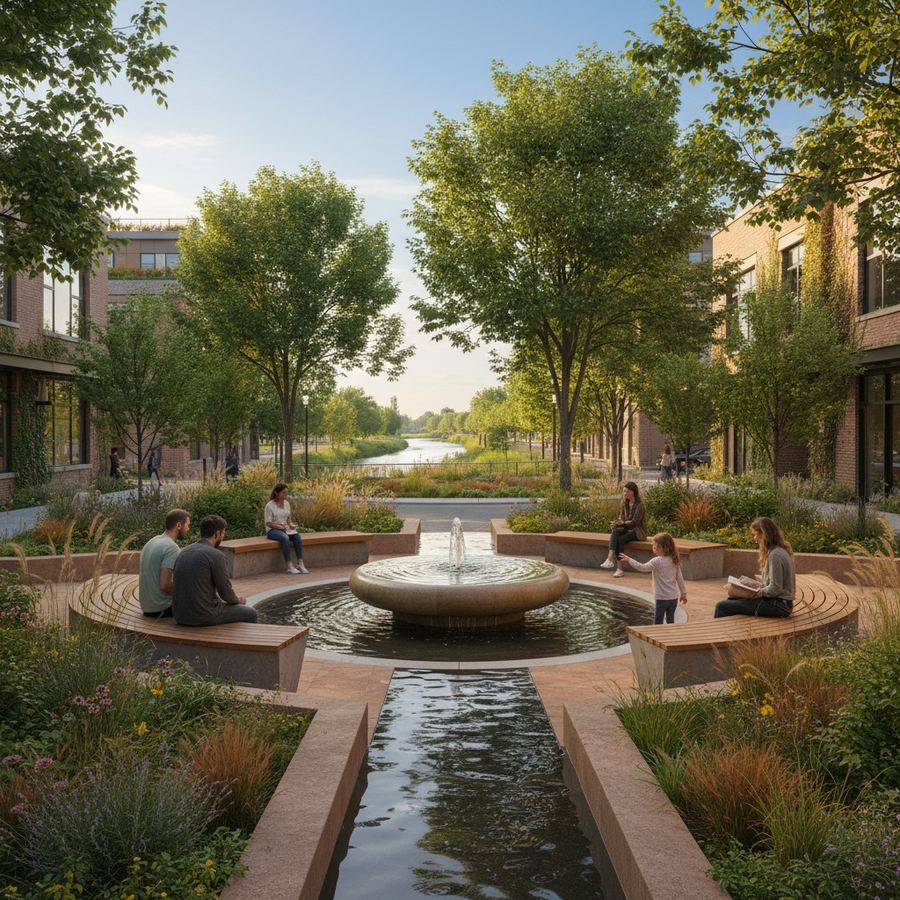
This is not just about pleasantness, though pleasantness matters. Comfortable streets produce measurable economic outcomes. Retail studies consistently show that streets with good pedestrian conditions generate more foot traffic, longer visits, and higher per-visit spending than streets designed primarily for vehicle throughput. A main street where people enjoy walking is a main street where businesses thrive.
Property values respond to streetscape quality. Research on street tree planting has found that mature street trees increase adjacent residential property values by 3 to 15 percent, depending on the study and location. Commercial properties on well-designed pedestrian streets command higher rents than comparable properties on auto-oriented corridors.
Public health benefits compound over time. Streets that are comfortable to walk on get walked on. Communities with walkable streets and connected trail networks have higher rates of physical activity and lower rates of the chronic diseases associated with sedentary lifestyles. The street is not just a place to move through. It is a piece of public health infrastructure, and its comfort level determines whether people use it.
The starting point for all of this is straightforward. Ask whether a street is comfortable for a human being on foot, on a hot day, on a cold day, carrying groceries, pushing a stroller, using a wheelchair. If the answer is no, the redesign should start there. Not with traffic models or parking counts, but with the basic question of whether a person would want to spend time in this place. Everything else follows from that.