There is a persistent idea in city planning that nature is something you drive to. A state park an hour away. A national forest on the other side of the county. A lake you visit twice a summer. And those places matter. But the nature that shapes daily life, the nature that affects how people feel and how communities function, is the nature within walking distance of where people already are.
This is not a sentimental argument. It is a practical one, supported by decades of research across public health, ecology, economics, and urban design. The evidence points in one direction: cities that bring nature closer to residents become healthier, more resilient, and more economically stable. The distance between a person's front door and the nearest patch of green space is one of the most underappreciated variables in urban quality of life.
The Health Case Is Stronger Than Most People Realize
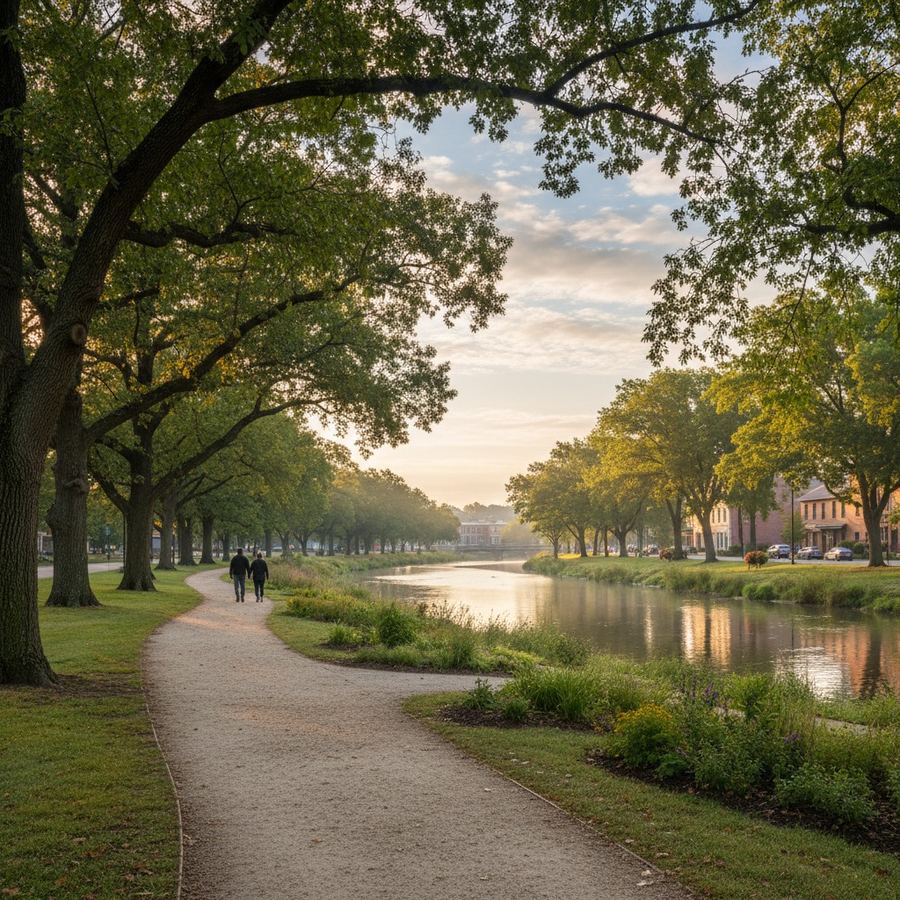
The connection between nearby nature and human health has moved well past the anecdotal stage. Controlled studies have shown that even brief exposure to green environments reduces cortisol levels, lowers blood pressure, and decreases heart rate. A 2019 study published in The Lancet Planetary Health found that residential proximity to green space was associated with reduced mortality from cardiovascular disease, and the effect held across income levels and geographies.
Air quality improves measurably in neighborhoods with mature tree canopy. Trees filter particulate matter, absorb ground-level ozone, and reduce ambient temperatures that accelerate smog formation. The EPA has documented how urban forests contribute to cleaner air in cities where ground-level ozone and particulate pollution are persistent challenges. Portland, Oregon, which has set a target of reaching 33% tree canopy coverage citywide, frames this explicitly as a public health strategy, not just an aesthetic preference.
Mental health outcomes follow similar patterns. Access to neighborhood green space has been linked to lower rates of depression and anxiety, improved attention and cognitive function in children, and faster recovery times in hospital patients with views of trees. These are not marginal effects. For populations already under stress from noise, crowding, and economic pressure, nearby nature functions as a genuine health intervention.
Property Values and Economic Stability
The economic effects of urban nature are well documented and surprisingly consistent. Proximity to parks, trails, and tree-lined streets increases residential property values by measurable margins, typically between 5% and 20% depending on the quality and accessibility of the green space. The Trust for Public Land has tracked these effects across dozens of U.S. cities and found that the relationship holds in both high-income and lower-income neighborhoods.
This matters for municipal finance. Higher property values generate more tax revenue, which funds the very services that make neighborhoods livable. A well-maintained park system is not a cost center in isolation. It is part of the economic engine that sustains a city's fiscal health. Communities that neglect their green infrastructure often find themselves in a cycle where declining quality of life leads to declining property values, which leads to declining revenue, which makes reinvestment harder.
Commercial districts benefit too. Retail corridors with street trees and nearby green space see higher foot traffic and longer dwell times. The effect is intuitive once you think about it: people prefer to walk, shop, and linger in places that feel comfortable, and trees and landscaping contribute directly to that comfort, particularly in summer heat.
Ecological Function in the City
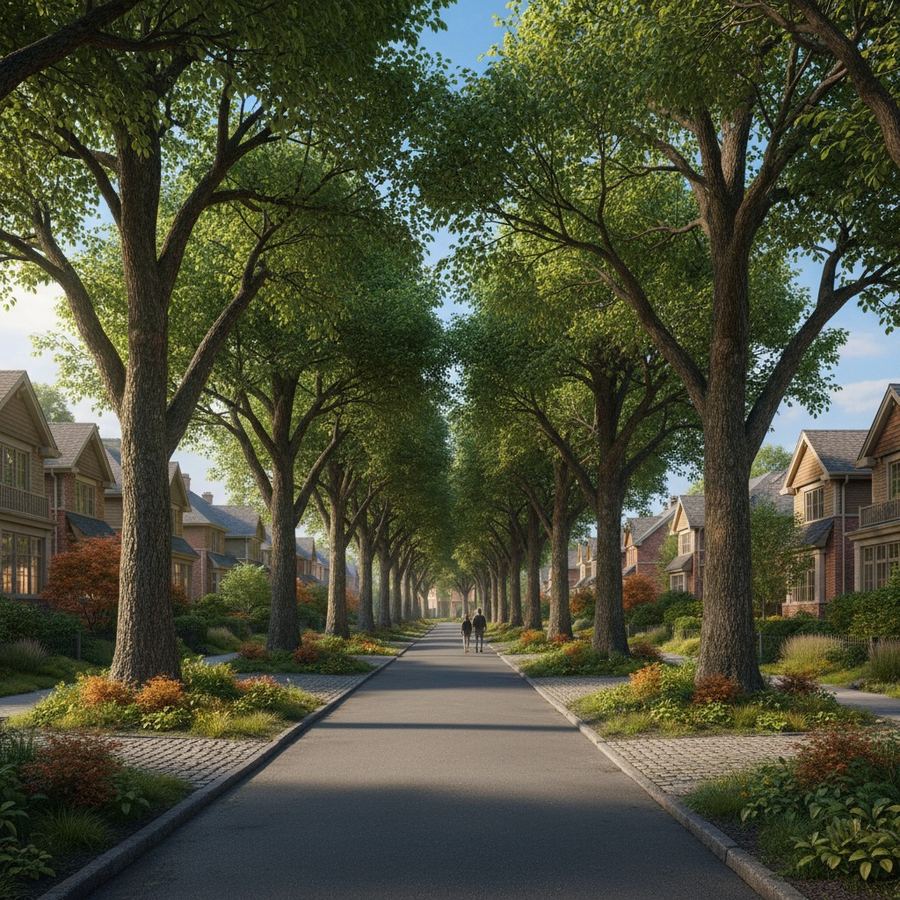
Urban nature is not just about human benefit. Cities sit within larger ecological systems, and the green spaces within them play functional roles that extend beyond municipal boundaries. Pollinator habitat in urban areas, even small patches of native plantings along streets and in small natural areas, supports agricultural productivity in surrounding regions. Urban tree canopy provides stopover habitat for migratory birds. Stream buffers and rain gardens manage stormwater in ways that protect downstream water quality.
The concept of green corridors connecting urban parks to larger natural areas is gaining traction in cities that understand this ecological dimension. Singapore's park connector network, which links parks and nature reserves through a system of greenways, is one of the most cited examples of this approach at scale. But even modest efforts, like maintaining vegetated stream buffers or planting native species in median strips, contribute to urban ecological function.
Stormwater management deserves particular attention. In cities with aging combined sewer systems, heavy rainfall overwhelms infrastructure and sends untreated water into rivers and lakes. Green infrastructure, including rain gardens, bioswales, permeable surfaces, and tree canopy, absorbs and slows rainfall before it reaches the pipe system. This is not a theoretical benefit. Cities like Philadelphia and Milwaukee have invested hundreds of millions of dollars in green stormwater infrastructure precisely because it is more cost-effective than expanding gray infrastructure alone.
The 10-Minute Walk and the Proximity Principle
One of the most useful frameworks for thinking about urban nature access is the 10-minute walk standard championed by the Trust for Public Land. The idea is straightforward: every person in every city should live within a 10-minute walk of a quality park or green space. It is a simple metric, but it reveals enormous disparities. In many American cities, low-income neighborhoods and communities of color are far less likely to have accessible green space nearby.
The proximity principle matters because access that requires a car is not really access for everyone. A regional park 15 miles away serves a different population than a neighborhood park three blocks from home. Children, elderly residents, people without vehicles, and anyone who cannot dedicate half a day to reaching a natural area all depend on nature that is close, safe, and reachable on foot. The 30x30 initiative, which aims to conserve 30% of lands and waters by 2030, has brought welcome attention to large-scale conservation. But the urban dimension of that goal, ensuring that nature exists where most people actually live, deserves equal emphasis.
What This Means for Planning
Understanding why nearby nature matters changes how cities should approach land use, development review, and capital investment. It means evaluating new development not just for density and traffic impact but for its relationship to green space. It means treating tree canopy as infrastructure, not decoration. It means recognizing that a trail connection or a restored stream buffer is not a luxury amenity but a component of public health and ecological function.
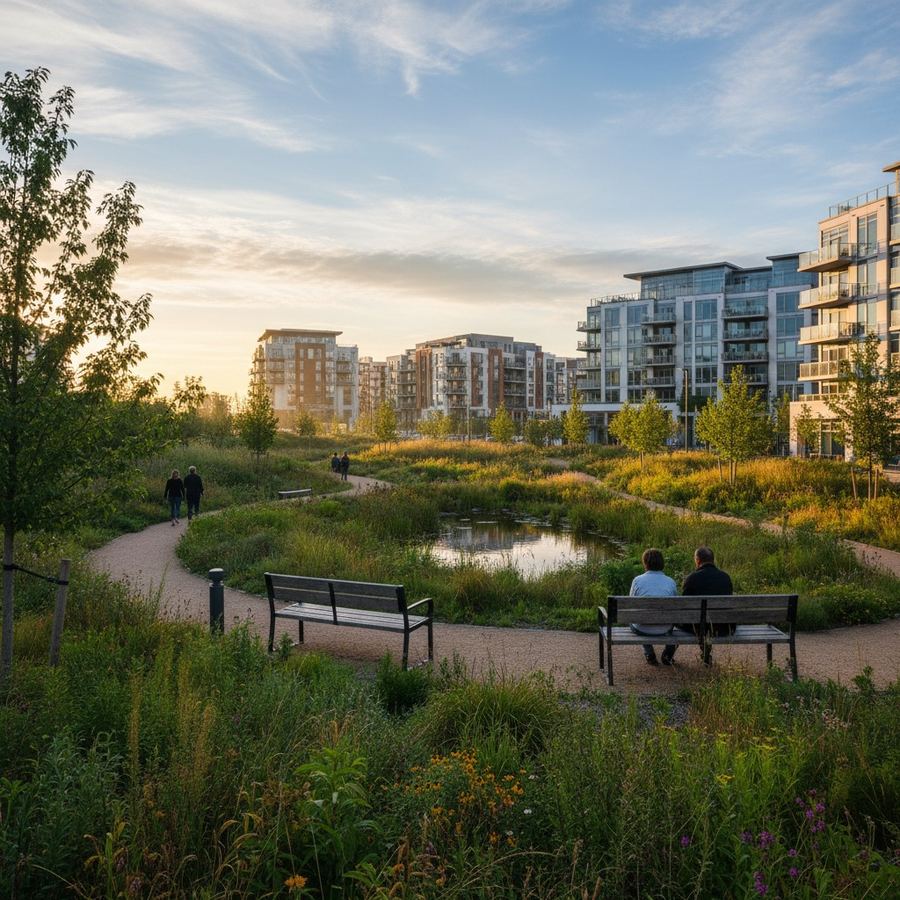
Rating systems like LEED for Neighborhood Development (LEED-ND) and the Sustainable SITES Initiative have begun to formalize these connections, awarding credit for proximity to open space, tree preservation, stormwater management, and habitat connectivity. These frameworks are imperfect, but they represent a shift in how the development community thinks about the relationship between buildings and the landscapes around them.
The cities that will fare best in the coming decades are those that treat nature not as the opposite of urban life but as a necessary part of it. Not nature as an afterthought or a marketing feature, but nature as infrastructure, woven into the fabric of neighborhoods at a scale that people can actually reach and use. The research is clear. The tools exist. The question is whether the political will and planning priorities will follow.
That is what urban nature actually means in practice: not a single grand park, but a network of green spaces, tree-lined streets, stream corridors, and natural areas that together make a city function better for everyone who lives in it.