On a July afternoon, the surface temperature of a dark asphalt parking lot can exceed 150 degrees Fahrenheit. Fifty feet away, under the canopy of a mature oak tree, the surface temperature of the same asphalt might be 100 degrees. The air temperature difference between those two spots can be 10 to 15 degrees. This is not a rounding error. It is the difference between uncomfortable and dangerous, between a place where people will walk and one they will avoid.
Urban heat is one of the most tangible climate challenges facing cities and towns. It is also one of the most solvable. The factors that drive street-level heat are well understood: surface materials, shade coverage, vegetation, and building orientation. The tools for reducing that heat are not experimental. They are trees, lighter surfaces, shade structures, and thoughtful site design. The challenge is not knowing what works. It is doing it consistently, in the right places, at sufficient scale.
The Urban Heat Island Effect
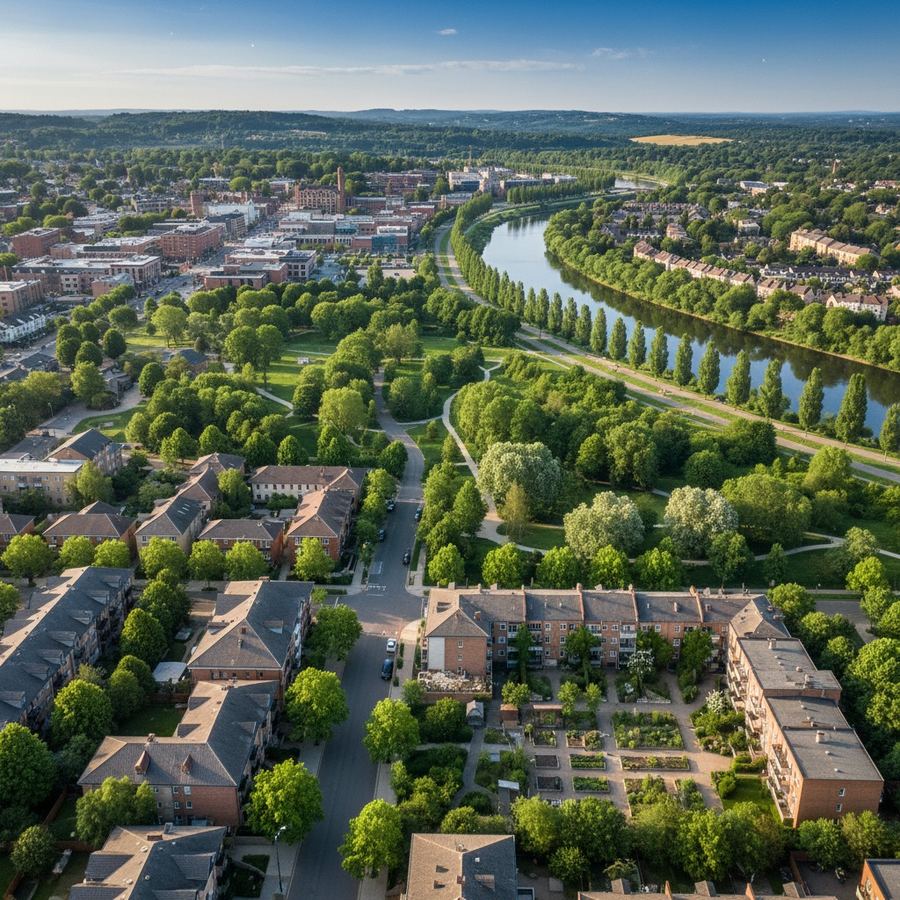
The urban heat island effect is the well-documented phenomenon in which cities and developed areas are measurably warmer than surrounding rural land. The EPA has tracked this extensively. On a summer evening, the air temperature in a dense urban area can be 5 to 10 degrees Fahrenheit higher than in the surrounding countryside. During the day, surface temperature differences can be far larger, sometimes exceeding 20 degrees.
The causes are straightforward. Cities have a lot of hard, dark surfaces. Asphalt roads, tar rooftops, concrete sidewalks, and brick buildings all absorb solar radiation during the day and release it as heat. Rural and suburban areas, by contrast, have more vegetation and soil, which absorb less heat and release moisture through evapotranspiration, cooling the surrounding air.
The heat island is not uniform. Within a single city, some neighborhoods are dramatically hotter than others. Research published by climate scientists has repeatedly confirmed that historically disinvested neighborhoods, those with fewer trees, more pavement, and less green space, tend to be the hottest. A 2021 study examining 108 U.S. cities found that formerly redlined neighborhoods were on average 2.6 degrees Celsius (about 4.7 degrees Fahrenheit) hotter than non-redlined areas in the same city. The physical legacy of disinvestment is measurable in degrees.
Albedo: Why Color Matters
Albedo is the measure of how much solar radiation a surface reflects rather than absorbs. A perfectly reflective surface has an albedo of 1.0. A perfectly absorptive surface has an albedo of 0. Fresh asphalt has an albedo of roughly 0.04 to 0.05, meaning it absorbs about 95 percent of the solar energy that hits it. Aged concrete is around 0.20 to 0.30. A white or light-colored cool roof can reach 0.60 to 0.70.
These numbers translate directly into heat. A parking lot paved with fresh dark asphalt will reach surface temperatures well above 140 degrees Fahrenheit on a clear summer day. The same area paved with light-colored concrete or high-albedo pavement might top out at 100 to 110 degrees. That 30-to-40-degree surface temperature difference affects the air above it, the buildings beside it, and the people walking across it.
Cool pavement strategies exploit this relationship. Reflective coatings, lighter-colored aggregate in asphalt mixes, and concrete pavement all increase albedo and reduce heat absorption. Los Angeles began coating streets with a reflective sealant called CoolSeal in 2017 and measured surface temperature reductions of 10 to 15 degrees Fahrenheit on treated streets. The cost was roughly $40,000 per mile, a fraction of what full repaving costs.
Trees as Cooling Infrastructure
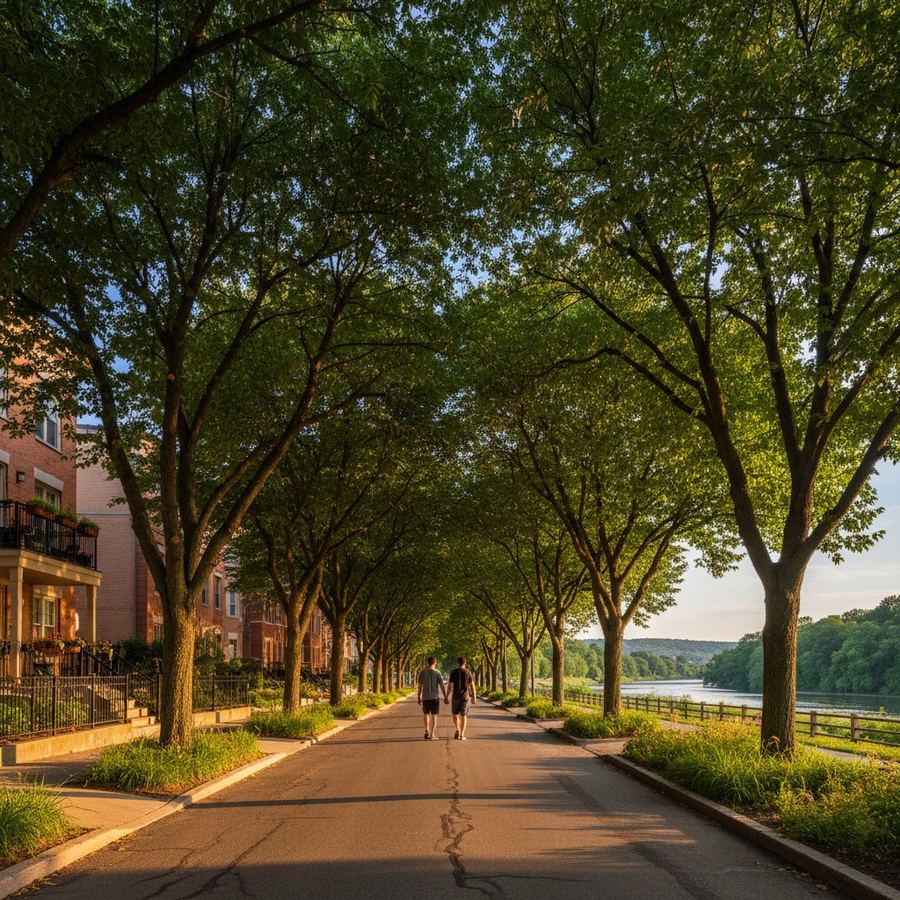
Trees cool their surroundings through two mechanisms. The first is shade. A tree canopy blocks direct solar radiation from reaching the surface below, which prevents that surface from heating up in the first place. The second is evapotranspiration. Trees pull water from the soil through their roots and release it as vapor through their leaves, a process that absorbs heat energy and cools the surrounding air, the same principle that makes sweating work.
The combined effect is substantial. Research from the U.S. Forest Service has found that a single mature shade tree can provide the cooling equivalent of about 10 room-sized air conditioners running for 20 hours a day. A well-canopied street can be 20 to 45 degrees Fahrenheit cooler at the surface than an unshaded street of the same material. Air temperatures under a dense tree canopy are typically 5 to 10 degrees lower than in exposed areas nearby.
Species selection matters. A tree with a dense, broad canopy like a red oak or London plane provides more shade than a narrow species like a honey locust. Deciduous trees provide summer shade while allowing winter sun through, ideal for streets in temperate climates. Evergreens block winter light, making them better suited for parking lots and non-residential applications.
Placement matters too. A street tree planted on the south or west side of a building provides direct shade to the facade during the hottest hours of the day, reducing interior cooling loads. Trees along sidewalks shade the walking surface and make the difference between a street that people use and one they cross as quickly as possible. The street-level experience of heat is shaped more by tree placement than by almost any other single factor.
The Compounding Effect
No single strategy solves urban heat. Trees alone cannot offset the heat generated by miles of dark pavement. Cool pavement alone does not provide the comfort benefits of shade. The most effective approaches combine multiple strategies.
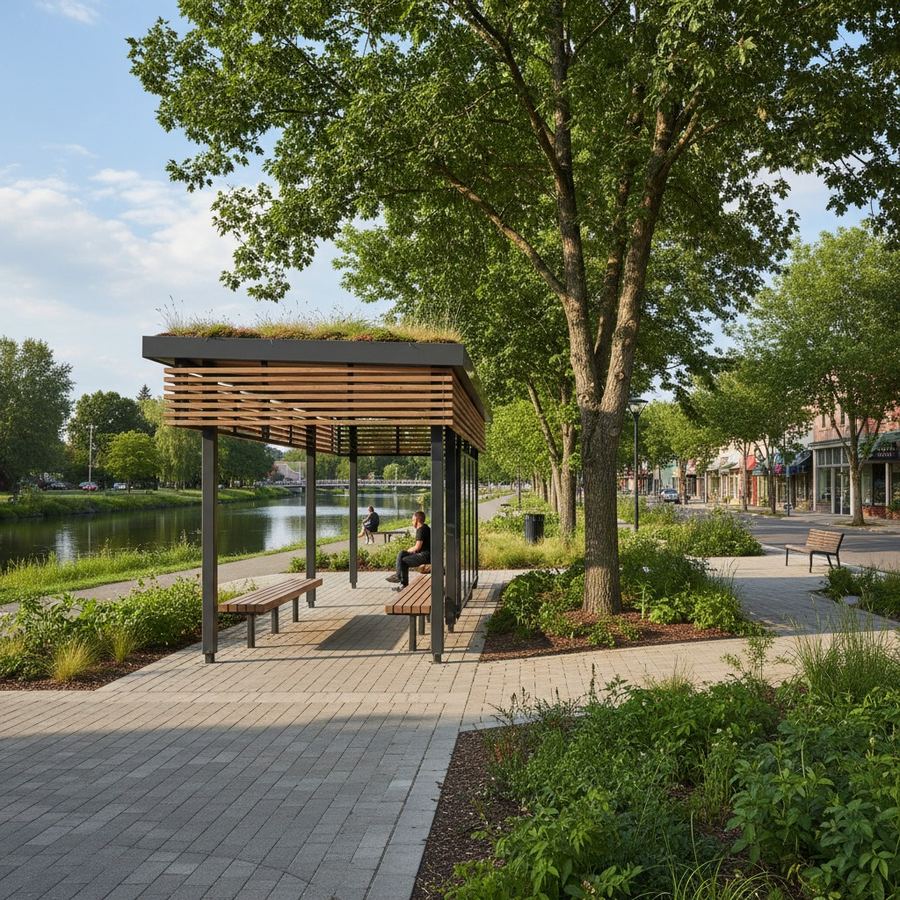
Consider a commercial corridor: a four-lane road with dark asphalt, no street trees, and strip-mall parking lots on both sides. On a 95-degree day, surface temperatures easily exceed 140 degrees. Now redesign it. Add a tree-lined median. Plant street trees on both sides with broad canopies. Resurface with a lighter asphalt mix. Require shade trees in parking lots. Add shade structures at transit stops and crossings.
The result is a layered accumulation of reductions. Surface temperatures fall 20 to 40 degrees across much of the corridor. Air temperatures at pedestrian height drop 5 to 10 degrees. The corridor becomes a place where people can walk, wait for a bus, or sit outside a shop without feeling like they are standing on a griddle.
Who Benefits, and Where
The neighborhoods that run hottest tend to be the ones with the least tree canopy, the most impervious surface, and the fewest resources to adapt. They are often the same neighborhoods where residents are most exposed because they work outdoors, lack air conditioning, or live in poorly insulated housing.
Equity-focused heat mitigation means prioritizing tree planting, cool surfaces, and shade structures where they will do the most good. Several cities, including Phoenix, Austin, and Louisville, have begun using heat mapping data to target projects in the hottest and most underserved neighborhoods. The Nature Conservancy has supported these heat mapping campaigns in more than 50 U.S. cities, using volunteer-collected temperature data to identify hot spots at the block level. The resulting maps make the inequity visible and show where cooling investments should go first.
A Design Problem With Known Solutions
Urban heat is sometimes discussed as though it were an inevitable consequence of development. It is not. It is a design outcome. Cities that choose dark surfaces, remove trees, and minimize vegetation get hotter. Cities that choose lighter surfaces, plant and maintain trees, and integrate green corridors into their street network stay cooler. The physics are not in dispute. The question is whether communities will make the choices that the science clearly supports.
These choices do not require new technology. They require specifying lighter pavement. Planting the right trees in the right places. Maintaining the trees that already exist. Designing shade into public spaces. Every one of these actions is proven, affordable, and available today.