There is a half-acre woodlot behind an elementary school in a midsize Ohio city. It is not a park. It has no signage, no trail map, no benches. It is a leftover patch of second-growth trees, some honeysuckle, and a seasonal drainage channel that trickles after rain. On paper, it is nothing special. In practice, it is where three classes of second graders learn about tree identification every fall. It is where a red-tailed hawk nests each spring. It is where stormwater from two parking lots slows down and soaks in instead of flooding the street below. It is the only place within a quarter mile where you can stand under a canopy of trees and hear something other than traffic.
Small urban natural areas like this one exist in nearly every community. They are the woodlots, wetlands, unmowed meadows, creek buffers, and forgotten green patches that never made it into anyone's parks master plan. They are often owned by municipalities, school districts, churches, or utilities, held without any particular management plan. They are frequently treated as vacant land waiting for a better use rather than as functional parts of the community's ecological and civic infrastructure.
This is a mistake. These scrappy patches of urban nature do more work than they get credit for, and losing them tends to be permanent.
What Small Natural Areas Actually Do
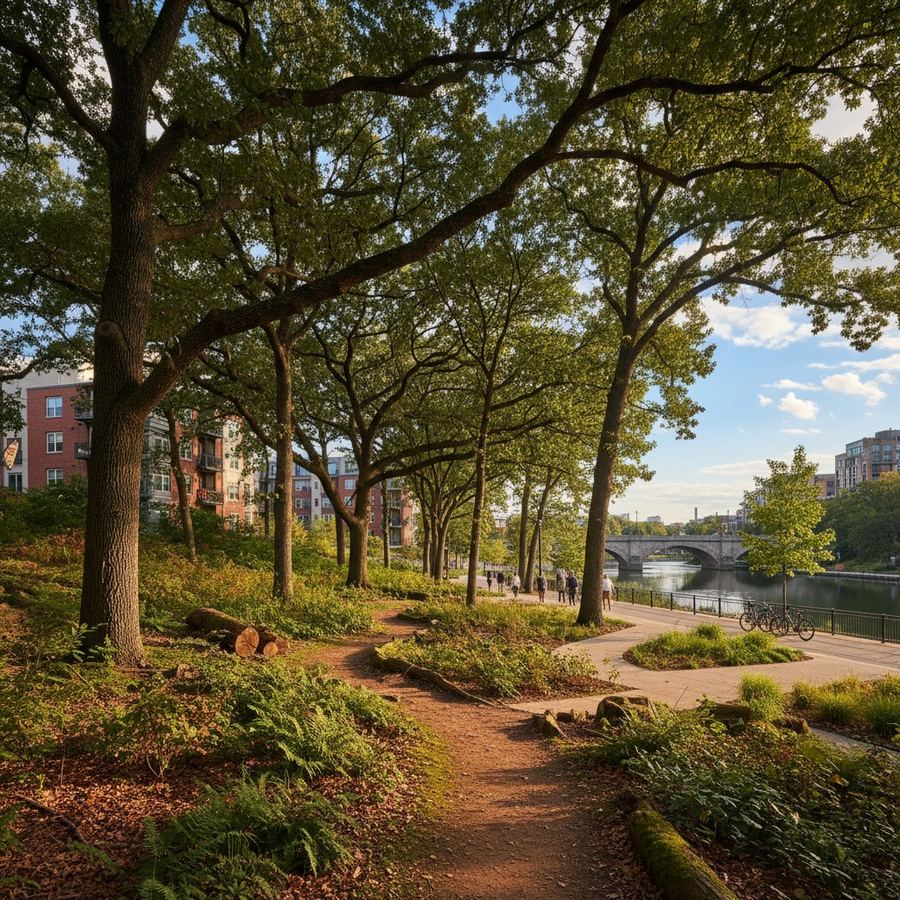
Stormwater management is often the most immediately practical benefit. A half-acre of woodland or meadow with healthy soil can absorb stormwater that would otherwise run off pavement into storm drains. The EPA estimates that natural ground cover absorbs up to 15 times more rainwater than impervious surface. A small wetland that holds water for a few days after a storm does the same work as an engineered retention basin, at no cost to the municipality.
Habitat value is real even at small scales. Research in urban ecology has consistently found that even small patches of native vegetation can support meaningful biodiversity. A quarter-acre meadow with native grasses and wildflowers can sustain dozens of pollinator species. A two-acre woodlot can provide nesting habitat for migratory songbirds. The Nature Conservancy has documented that connected networks of small natural areas can function as habitat corridors, allowing wildlife to move through urban landscapes that would otherwise be impassable.
These sites rarely support the full range of species found in large reserves. But their value is in the aggregate. A city with 50 scattered patches of woodland, meadow, and wetland has a different ecological profile than one with a single large park. The distributed network provides habitat in more locations, buffers stormwater across more sub-watersheds, and puts nature within reach of more residents.
Civic and Educational Value
The civic benefits are harder to quantify but no less real. For children growing up in developed areas, a half-acre of trees may be the most accessible example of a forest they encounter regularly. Schools use these areas for outdoor education when they are available. A natural area within walking distance eliminates the need for buses and the logistical overhead that makes field trips difficult. Studies on outdoor education have found that regular contact with natural settings improves attention, reduces stress, and supports academic engagement.
Neighborhoods with small natural areas tend to identify with them. The "woods behind the school" or "the meadow by the creek" become informal landmarks that people reference and remember. Losing these places is not just an ecological loss. It is a loss of something that residents experience as part of their neighborhood's character.
Why They Disappear
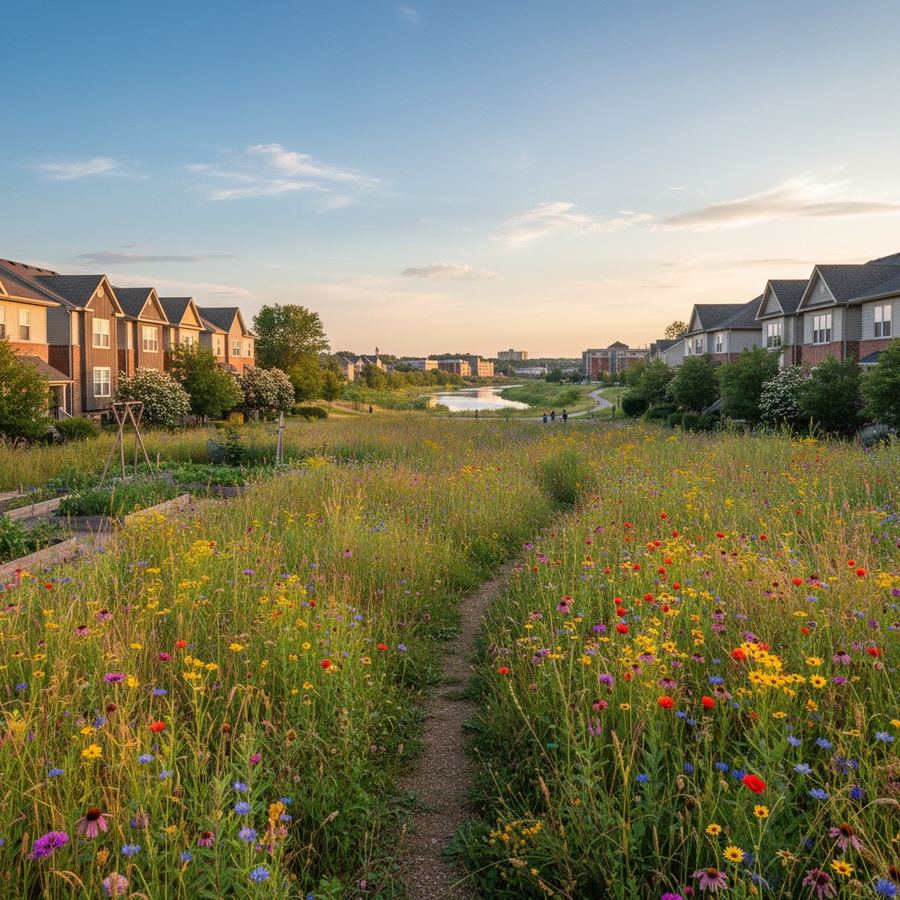
Small urban natural areas are vulnerable precisely because they are small and informal. They lack the political protection of a named park. They rarely appear in land-use plans as anything other than open space or vacant land. When a municipality needs a site for a utility building or a school district wants to expand a parking lot, these places get sacrificed first.
Each decision is individually reasonable. A city council sells a two-acre parcel described as "unused municipal land." A school board approves removing trees along a creek. Cumulatively, these decisions dismantle the distributed natural infrastructure of the community one piece at a time. And the loss is permanent. Once paved or graded, the soil structure, root systems, seed bank, and habitat value are gone. The ecological function of a mature woodland took decades to develop and cannot be replicated by planting ornamental trees in imported soil.
What Protection Looks Like
Protecting these areas starts with knowing they exist. Many municipalities have no inventory of their small natural areas. A natural areas inventory is a low-cost first step: identify what exists, who owns it, what functions it provides, and what threats it faces. Cities that have done this often find they have far more small natural areas than anyone realized, many providing benefits that would be expensive to replace.
Protection can take multiple forms. Conservation easements prevent future development. Overlay zoning can require review before natural areas are altered. Simple policy changes, such as requiring an ecological assessment before disposing of municipal land with tree cover, can prevent the most avoidable losses.
Stewardship matters too. Ignored natural areas degrade as invasive species encroach and dumping occurs. Basic stewardship, including invasive removal, trash cleanup, and monitoring, can be handled by volunteer groups or municipal staff at modest cost. Community stewardship programs that adopt small natural areas are active in hundreds of cities, and they work.
Connecting the Fragments
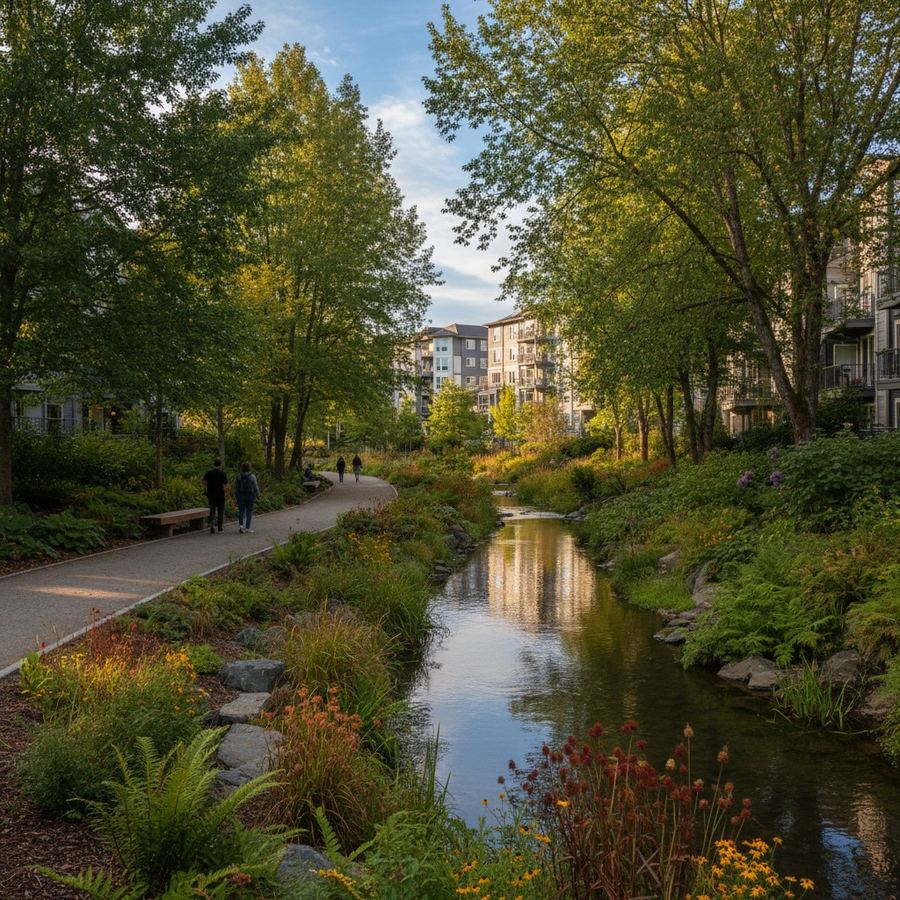
Individual small natural areas have value on their own, but their value increases dramatically when they are connected. A woodlot next to a creek buffer that connects to a wetland that links to a park creates a corridor of habitat and green infrastructure that is worth more than the sum of its parts. Wildlife can move. Water can flow naturally. People can walk from one space to the next.
Connectivity is what turns a collection of fragments into a system. A creek corridor running through six properties, three of them public, needs only the cooperation of three landowners to become a continuous greenway. A series of woodlots along a ridge can be linked by planting in the gaps to create a habitat corridor.
These connections often follow water. Creeks and drainage corridors are natural spines for green networks because they already have buffers and they connect uphill to downhill across the landscape. A city that protects and connects its small natural areas along waterways is simultaneously building a stormwater system, a habitat network, and a trail and recreation system.
The Argument for Paying Attention
The case for small urban natural areas is not sentimental, though sentiment is part of it. It is practical. These places manage stormwater that would otherwise overwhelm pipes. They provide habitat that supports pollinators, songbirds, and the ecological processes that healthy communities depend on. They offer accessible contact with nature in neighborhoods where that contact is scarce. They contribute to the character and identity of the places they are part of.
The cost of protecting them is low. The cost of losing them is high and usually irreversible. A community that inventories its small natural areas, protects the most valuable ones from casual disposal, and connects them into a functional network is making one of the most cost-effective investments in livability and resilience available. It does not require a large budget. It requires paying attention to the places that are easy to overlook, and deciding that they are worth keeping.